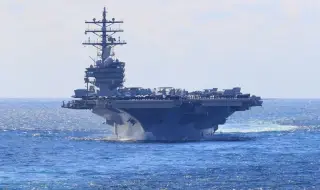
The crisis, resulting from the closure of the Strait of Hormuz to much of the commercial shipping, serves as a starting point for examining the challenges of planning a "green" transition from a global periphery perspective.
The impact of both Iran’s and the US’s obstructionist actions in the Strait of Hormuz is having a profound impact on the two largest economies in the Maghreb. Morocco, whose phosphate fertilizer production depends on imports of sulfur and ammonia from the Persian Gulf, has faced supply disruptions at a time when its "green" strategy industrialization aimed at overcoming this dependence has not yet been realized.
Algeria could benefit from increased hydrocarbon revenues due to rising oil prices, but it is precisely because of this that it faces renewed pressure to postpone the transition to "green" energy.
The difficulties faced by the two economic powers of the Maghreb demonstrate the tension between the aspiration of developing countries to energy sovereignty and the global upheavals that hinder its achievement.
The crisis in the Strait of Hormuz clearly demonstrates that geopolitical upheavals in the Persian Gulf or the Middle East, even more so than the war in Ukraine, inevitably go beyond the borders of the region in which they arise.
This reality has an impact on the way in which Algeria and Morocco carry out their transition to "green" energy, and further strains the already fragile balance between domestic stability and external factors in both countries, writes Yasmin Zarloul in her analysis for the "Carnegie Middle East Center".
The Pursuit of Renewable Energy: Push and Pull Dynamics
The green transition has entered the global political agenda as a promise of transformation. Since the 2015 Paris Agreement, which established a global framework for reducing greenhouse gas emissions through climate action plans, decarbonization efforts have focused on achieving a series of goals - from limiting emissions to meeting renewable energy commitments.
The first "Global Review" The Global Stocktake, an assessment mechanism agreed by countries at the 2023 United Nations Climate Change Conference (COP28) in Dubai, reinforced this trend, assessing individual countries’ progress and urging some to step up their climate plans. COP28 also marked the adoption of the first formal UN climate agreement that explicitly calls for a transition away from fossil fuels in energy systems. Yet, while pressure for decarbonization has been mounting since then, the world in which this transition must take place bears little resemblance to the orderly sequence of policy steps envisioned in the Paris Agreement.
The most recent manifestation of this divergence occurred in the Persian Gulf region. US and Israeli strikes on Iran in February 2026 triggered a war that resulted in numerous casualties, destabilized the geopolitical situation in the region, and caused severe damage to infrastructure and supply chains. In response to the attack, Iran closed the Strait of Hormuz to most shipping. The subsequent US blockade of Iranian ports further exacerbated the disruption. The crisis quickly became global.
Ships passing through the Strait of Hormuz have fallen by more than 95% since March, limiting supplies of both energy and fertilizer.
As a result, energy prices have risen sharply, with the price of Brent crude oil jumping more than 50% amid a daily production shortfall estimated at 14.5 million barrels. At the same time, the cost of fertilizers, whose ingredients are mainly sourced from the Persian Gulf region, has risen significantly.
The World Bank predicts that urea prices will rise by nearly 60% in 2026. The Food and Agriculture Organization has warned that fertilizer prices could be 15-20% higher on average in the first half of the year, likely to lead to lower yields for fertilizer-intensive crops such as wheat, rice and maize. With major food producers such as India and Brazil relying on imported fertilizers, higher costs could affect crop choices and planting rates, ultimately affecting yields and food security.
For the two largest economies in the Maghreb, the crisis has exacerbated long-standing contradictions - between dependence on domestic and international resources and the transition to "green" energy. In this context, Morocco and Algeria are taking different directions.
As an importer of ammonia, sulfur and energy, Rabat is trying to contain the shocks caused by the shortage and find ways to compensate for them. At the same time, Algeria is positioning itself as one of the main suppliers of oil and gas to Europe in the face of an emergency.
Rabat's perspective
For Morocco, the crisis in the Strait of Hormuz is a double-edged sword. On the one hand, the difficult access to sulfur and ammonia from the Persian Gulf region threatens to limit phosphate production. On the other hand, the crisis presents an opportunity for Rabat to seek alternatives to Gulf producers, while the kingdom’s seaports are attracting increased interest as potential transit hubs for ships that previously transited the Gulf region.
The crisis thus highlights the contradictory position the kingdom finds itself in. While its phosphate industry still depends on compounds supplied by the Gulf, the country is in a better position than other producers to maintain its exports via Atlantic routes. In addition, Morocco now has an additional incentive to implement its plans for a "green" transition - although they carry their own risks, especially if implemented hastily.
The impact of the Strait of Hormuz crisis on Morocco - a country that holds nearly 70% of the world’s known phosphate reserves and is one of their largest exporters - was almost immediate. Converting phosphate rock into ready-to-use fertilizer requires sulfur, a raw material that the kingdom sources almost entirely from the Gulf countries.
The latter account for about 44% of the world's sulfur trade, with most of it produced as a by-product of oil and gas refining. OCP Group, Morocco's state-owned phosphate and chemicals company, imports approximately 3.7 million tons of sulfur annually; most of this is processed locally into acid, which is needed to convert phosphate rock into diammonium phosphate (DAP) and monoammonium phosphate (MAP), which are used to make fertilizers. The COVID-19 pandemic in 2020 had already strained this model, with ammonia production costs rising to $1,000 per tonne from a pre-pandemic level of $110.
Also crucial to the discussion is Rabat’s broader energy dependence. Morocco meets nearly 90% of its energy needs through imports. Although at the time of writing, oil prices have returned to pre-conflict levels following the US-Iran ceasefire agreement, they could still rise. On the one hand, the fragile truce has already cracked more than once.
On the other hand, shipping continues to be affected by insurance costs and the ongoing uncertainty over passage through the Strait of Hormuz. The combination of higher oil prices and tight sulfur supplies has limited consumer purchasing power at a time when Moroccan households have already suffered from an increase in diesel and gasoline prices to around $1.60 per liter in April 2026. Companies in the construction and real estate sectors have been among the hardest hit; similar pressures have also been felt in the production of petroleum products, such as plastics. In response to the emergency, the government has resumed financial support for the transport sector, effective March 2026.
Morocco's exposure to the effects of the crisis goes beyond physical supply chains and affects the regulatory environment in which the country's "green" industry strategy is being shaped. As the closure of the Strait of Hormuz squeezed fertilizer markets, the European Union was debating whether to temporarily suspend the Carbon Border Adjustment Mechanism (CBAM) for fertilizers, a measure that came into effect on January 1, 2026.
The carbon tax was introduced by the bloc partly to encourage greener producers, such as OCP, which is focused on producing "green" ammonia. Even before the war, France and Italy had been pushing for an exemption, citing the pressure on European farmers. By March 30, 2026, other member states, such as Croatia and Ireland, had joined the call, warning of threats to the competitiveness of local farmers. The European Commission proposed an "emergency brake" mechanism that would allow the CBAM to be temporarily suspended in the event of "serious disruptions to the Union's internal market", and announced a parallel temporary reduction in tariffs on certain types of fertilizer.
While it does not directly affect Morocco at the moment, the temporary suspension shows that even rules designed to incentivize "green" producers, can be changed under political pressure, which introduces an element of uncertainty regarding the expected benefits. Meanwhile, OCP is looking for opportunities outside Europe - according to data in March, the company sold 90,000 tons of phosphate fertilizers to markets in Latin America and is in talks with Indian companies to conclude additional deals.
For Morocco, the current crisis is reminiscent of the events after the Russian invasion of Ukraine in 2022, when global ammonia and fertilizer markets were destabilized. The difference, however, is that unlike the war between Russia and Ukraine, the closure of the Strait of Hormuz represents a physical blockage of a key transport corridor, making it difficult to find alternative sources of supply. It is important to note that after the 2022 turmoil exposed OCP's dependence on imported ammonia (the company spent $ 2 billion on its purchase in the year in question - ed.), Rabat announced a strategy for "green" ammonia, aiming to produce this compound from hydrogen produced locally from renewable sources. The plan called for the construction of a $7 billion "green" ammonia complex.
However, this facility has not yet been put into operation. Furthermore, the production of "green" ammonia may not be able to fully compensate for the dependence on the second important component, sulfur. Due to limited supplies from the Persian Gulf region, OCP has had to diversify its sulfur supply routes - in particular through Kazakhstan and the Black Sea - and at the same time shift production to "triple superphosphate" fertilizers. These types of fertilizers require significantly less sulfur than DAP and MAP, which have been the preferred choices until now.
The Algerian perspective
Algeria faces a different set of challenges. While Morocco is vulnerable due to its dependence on imported energy and fertilizers, Algeria’s international position is strengthened by its hydrocarbon wealth. Observers say this could be a good time for Algeria to take advantage of the reorientation of much of the world towards oil and gas suppliers outside the Persian Gulf region.
However, infrastructure constraints, as well as production quotas set by the Organization of the Petroleum Exporting Countries (OPEC) - of which Algeria is a member - limit the country’s ability to increase output. In addition, the country must cope with the ever-growing domestic consumption of gas - an issue that the government is obliged to prioritize, even against the backdrop of sharply increasing needs of other countries.
In the period 2020-2024, the oil and gas sector accounted for about 82% of Algeria’s exports and 45% of budget revenues. Algeria is the third-largest gas supplier to the European Union and the second-largest pipeline gas supplier after Norway. In 2022, when Russia's invasion of Ukraine cut off Europe's access to its main gas source, several European countries turned to Algeria for alternative supplies.
In April of that year, Italy reached an agreement with Algeria to increase gas imports by about 40%, with Algeria's state-owned oil and gas company "Sonatrach" increasing volumes transported through the "TransMed" pipeline by up to 9 billion cubic meters of additional gas per year. In July 2022, "Sonatrach" signed a three-year contract with France's "Engie" to supply gas - at a new, higher price - amid turmoil in international markets. This allowed Algeria to secure both revenue and geopolitical influence. In 2025, gas exports from "Sonatrach" reached approximately 49 billion cubic meters, of which 14 billion cubic meters were delivered in the form of liquefied natural gas (LNG).
This year, the closure of the Strait of Hormuz and Iranian attacks on liquefied natural gas (LNG) facilities in Ras Laffan (Qatar) - which prompted state-owned Qatar Energy to declare force majeure on supplies to European countries on 4 March 2026 - have once again brought European leaders to Algeria. Italian Prime Minister Giorgia Meloni visited the capital, followed by Spanish Foreign Minister José Manuel Álvarez. This is of great importance as Italy and Spain - which currently source around 30 percent of their gas imports from Algeria - are seeking to increase their purchases. Rome has deepened cooperation between Eni (an Italian energy company in which the state is the largest shareholder) and Sonatrach, with recent discussions focusing on offshore exploration and unconventional hydrocarbons. Algerian gas also accounted for over 29 percent of Spain's total gas imports in the first two months of 2026, coming mainly through the Medgaz pipeline, in which Spanish multinational gas and electricity company Naturgy has a minority stake.
Algeria has benefited from the situation. The price of Sahara Blend, the Algerian benchmark crude oil, prized by European refiners for its low sulfur content, was below $70 per barrel in January 2026, but in March it exceeded $100, reaching its highest level since the 2022 turmoil. In early May 2026, even with a fragile ceasefire, prices continued to fluctuate between approximately $95 and $110.
By mid-June, oil prices had fallen below $80 per barrel on expectations—which proved correct—that the U.S.-Iran memorandum of understanding would lead to the reopening of the strait. However, they remained above the previous year’s average, with a return to pre-war levels expected to take time. All signs point to the fact that external demand, stimulated by the conflict, has brought hydrocarbons back to the centre of Euro-Mediterranean relations. The same phenomenon ensures that hydrocarbons remain at the heart of Algeria’s economic and political life.
However, as it is bound by OPEC quotas, Algeria has limited scope to increase its oil production. In April 2026, the country announced a very modest increase of 6,000 barrels per day, reaching a total of 977,000 barrels. Significant new export volumes – whether by pipeline or in the form of liquefied natural gas (LNG) – would require new investments in exploration and production, as well as in infrastructure. Furthermore, although the TransMed pipeline has a nominal capacity of around 33.5 billion cubic metres, transmission in 2024 amounted to only 21 billion cubic metres; This suggests that the main constraint is not just the pipeline capacity, but the ability to extract and export additional gas.
The "Hassi R'mel" field, which provides nearly half of the national gas production, has been in a long-term decline, necessitating repeated measures to maintain production levels: first in 2017 through a $2 billion project to stabilize production, and then - in 2024 - through additional investments of $2.3 billion to modernize facilities. At the same time, domestic gas demand is growing by 4-5% per year due to population growth and increasing electricity consumption.
Lack of easy solutions
The crisis around the Strait of Hormuz shows that the Maghreb countries' transition to green energy is taking place under conditions that affect the two political and economic giants of the region in different ways and provoke different reactions in them. Morocco remains heavily dependent on energy imports, as well as sulfur and ammonia from the Persian Gulf, while at the same time facing a changing European regulatory environment. This may or may not necessarily incentivize the lower-carbon products whose production the CBAM mechanism aims to encourage. In contrast, Algeria sees an opportunity to meet the needs of the European countries in question.
So far, Morocco's response has been two-fold. The country is diversifying its sources of raw materials while also moving towards renewable energy to reduce its long-term dependence on imported ammonia. A decisive shift towards renewable energy makes sense in theory, but it requires low-carbon production to prove viable in the long term.
As for Algeria, its decision to intervene and supply hydrocarbons to European countries helps to relieve economic pressure on the state in the short term. In the long term, however, this approach reinforces Algeria’s existing rentier model and weakens incentives for diversification. Thus, even if the Strait of Hormuz is permanently opened and prices normalize, Algeria will still face the same challenges that existed before the crisis: a persistent dependence on oil and gas, limited fiscal space, and an incomplete diversification process.
In both cases, it is clear that a crisis originating elsewhere could reorder the positions of both countries in the global hierarchy. Both Morocco and Algeria have made commitments to long-term climate plans, have drawn up national energy strategies, and have formulated their visions for energy sovereignty. However, the response of countries to crises is determined by the urgency of the situation – be it by restoring subsidies, shifting to alternative buyers or increasing fossil fuel extraction. Widely advertised green energy strategies are being hastily modified or even hastily halted by the very governments that originally designed them.
Taken together, these dynamic processes complicate the idea of the energy transition as a linear, planned sequence. In policy terms, decarbonisation is still described as a series of events and measurable steps: targets, infrastructure capacity, financial agreements, shifting supply chains to allied or nearby countries ("friend-shoring" and "near-shoring"), certifications and market access.
However, this seemingly technocratic and linear course of events ceases to be valid when crises accumulate. The conditions that give rise to crises like the one in the Strait of Hormuz are neither accidental nor inevitable. They are the result of political decisions by powerful state actors that condemn the entire Middle East and North Africa region to "endless wars", with consequences that extend far beyond the region.
The crisis in the Strait and its consequences are both short-term and long-term. They show that shocks are no longer external to plans for a "green" transition, even in the far-flung countries of the Maghreb. The consequences in question determine what future scenarios remain possible. Algeria may see an opportunity in its role as an extraordinary global supplier of fossil fuels, even if this ultimately does not serve its own planned transition. At the same time, while the war between Russia and Ukraine may have strengthened the drive for "green" adaptation from Rabat's perspective, the current crisis represents a much more severe test for Morocco. The situation around the Strait of Hormuz could call into question the viability of the country’s transition to green energy. At the very least, a reality marked by global crises of similar magnitude will change the perception of the nature and form of such a transition.
Conclusion
The question for Morocco and Algeria is no longer whether to reorient themselves towards green energy. Both countries have taken steps in this direction, although Morocco has done so more decisively than Algeria. The question is how and when to act. For Morocco, the current convulsive moment shows that the bet on the production of green ammonia for the domestic market is justified - at least for now. The feasibility of this planned turn will depend on whether production from renewable sources is increased and subsequently maintained at the necessary high level; if that happens, the kingdom could establish itself as a leading supplier of phosphate-based fertilizers.
For Algeria, the choice is more stark. Its oil and natural gas abundance provides immediate fiscal relief and strengthens diplomatic leverage, but it also deepens the country’s dependence on resources that are finite and whose revenue-generating potential will diminish once the current crisis is over. Alternatively, Algeria could try to stick to its green transition schedule but, in the process, forgo the immediate financial benefits of increased global demand for oil and gas from countries whose production has not been significantly affected by the crisis.