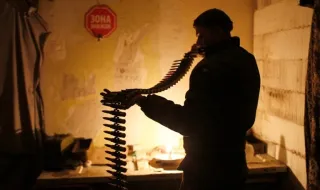
Kherson, which is located in southern Ukraine, was occupied by Russian forces in the first days of the war in February 2022. Then, in November, Ukrainian troops managed to liberate it. Since then, the city has been shelled by the Russian army almost daily.
According to the Ukrainian military administration, during Russian attacks in Kherson, 167 people were killed and 2,215 were injured from May to October this year alone. Around 75,000 people currently live in the city. In August, the streets in the northern part of Kherson, which until then had been inaccessible to light Russian drones, were also covered with protective nets.
In the death zone
The remaining districts along the Dnipro River have long been considered a death zone. “We are living in very difficult conditions, without electricity or water. People collect rainwater because they cannot go down to the riverbank,” an elderly man carrying his shopping in a cart tells the DW team. In 2023, all attempts to restore the water and electricity supplies came to an end.
“We are not thinking about evacuation,” says Volodymyr, who lives together with three elderly women in a five-story apartment block that has survived almost by a miracle. “How could we leave for some unfamiliar city with only 2,000 Ukrainian hryvnias—around 40 euros—in benefits? My home is here, and my sister from Kyiv pays the utility bills,” explains the man, who has already experienced many bomb explosions.
The ceasefire made urgent repairs possible
Explosions can still be heard across the city. According to the military, demining is being carried out on both banks of the Dnipro. Since the ceasefire began, the authorities have repeatedly warned of a high risk from mines. In recent weeks, Russian drones have scattered large numbers of mines across the Kherson region.
Maxim, who works for the regional energy company, currently has a great deal of work. Entire teams are travelling to carry out repairs in villages they have not visited for years. The other utility services are also working all day. They are repairing water pipelines and building new bomb shelters, while also taking care of cleanliness in front of the destroyed regional administration building and on the city streets.
The Russian army is also taking advantage of the ceasefire
“Street of Peace,” where the market is located, is covered with nets—because the market, as well as the surrounding houses, must be protected from drones, explains Tetyana, who lives nearby and sells pizza. She has a dog named Leonchyk, which barks at the drones from the balcony. “Two or three months ago, cars were burning here every day. But this is my city; I was born here and I live here,” the woman says.
There are stalls selling sour cream, fruit, meat and sportswear at the market, and people are walking around as they did before the war. “While the ceasefire lasts, we do not have to hurry. I would like it to stay that way, but everyone is afraid that the ceasefire will end and things will become very bad again,” Oleksandra, who has come to the city with her daughter to visit her grandmother, tells DW.
Local authorities and the military share these fears. According to them, Russian forces have used the ceasefire to bring new troops, ammunition and equipment to the left bank of the Dnipro. The Telegram channel “From Mariupol to the Carpathians,” linked to the Russian combat unit “Eskadron,” is fuelling these fears and issuing threats: “Civilians must leave Kherson by midnight. The ceasefire is valid only until a certain point.”
Travelling by bus and taxi is risky
Public transport in Kherson was one of the main targets of Russian attacks, and today some routes cover only half of their former itineraries—the drivers do not dare to drive to the riverbank, even though there is currently no shelling.
Most residents of the coastal districts left their homes after Russian airstrikes last summer. Many are using the ceasefire to check on them, while taxi drivers are charging around 200 euros for the risky journey there, local people say on social media. But there are also social taxis—around a dozen cars maintained by local aid organisations and the city authorities, which take elderly people to hospitals or the administration free of charge every day.
In October, the social taxis served more than 460 people, while another 110 were transported from the “red zones” in the city. At present, around two-thirds of Kherson’s residents are considered to be in need of protection, primarily pensioners, says Oleksandr Honchar of the “Strong Because We Are Free” Foundation.
90-year-old Lidiya Mykhailivna is to be picked up from the hospital, where she spent ten days after the windows of her home were shattered in a grenade strike. “I felt ill, I lost my hearing and my sight, but I am better now. This is already the third time,” the woman says.
Only she and one neighbour remain in the two-story apartment block where she lives. During the first years of the war, she looked after her husband, and now it is already too late for her to move elsewhere, says Lidiya, who has no relatives with whom she could stay. Her only great-granddaughter is somewhere abroad. “It is very frightening, painful and bitter,” she says of her lonely life during the war.
Source: www.dw.com