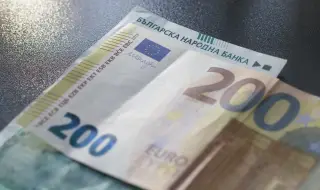
The Bulgarian real estate market is developing rapidly.
In recent years, prices in Sofia and other major cities have increased tremendously, and brokers testify to buyers who take several homes at once, writes the German "Die Welt" in an extensive publication.
In just two years - from 2022 to 2024 - the average price per square meter of new construction has doubled. Since then, prices have continued to grow, only since the beginning of the year in major cities they have jumped by 15 percent compared to 2024, it is clear from one of the major real estate portals. The German publication also informs that in Sofia a square meter costs an average of 2,000 euros, but can reach 4,000 in the most sought-after neighborhoods. However, there are also prices of 10,000 - in the luxury segment.
"Die Welt" also tells about the rumors circulating in Sofia about people who buy homes in Vienna, Berlin or Barcelona because they cannot afford to buy in Sofia. And all this is happening in the poorest country in the EU, the publication emphasizes.
Experts are of the opinion that the excessive demand is also due to certain people who are preparing for the adoption of the euro in the country. "A part of the population has a large amount of cash at home that needs to be laundered before entering the eurozone," lawyer Dimitar Kaldamukov, a specialist in commercial law, told "Die Welt": "Bulgarians are very old-fashioned in money laundering. "Whoever has a lot of illegal money at home buys houses to hide its origin."
80 billion leva under the mattresses
At the same time, the business of exchange offices in Sofia is also flourishing, the German publication further writes. The staff is already having problems because citizens are constantly coming in who want to convert their leva into euros in small tranches. "Die Welt" quotes economics professor at the University of National and World Economy Dragomir Stefanov, according to whom around 80 billion leva must be legalized before the introduction of the euro.
But we must hurry, as Bulgaria is expected to adopt the euro from the beginning of next year. After a transition period of several months, the leva will only be able to be exchanged at the Central Bank, where, however, their origin will have to be declared. To avoid this, people with stocks of illegal money have been preparing for years to join the eurozone, and buying real estate is definitely the preferred option for this.
Lawyer Kaldamukov explains to the German publication how the scheme works: A mortgage is taken out to purchase real estate, which is paid off in cash in the following years. No more than 5,000 euros are deposited into the bank each month - so that the bank does not ask about its origin. "On paper, Bulgaria has strict regulations against money laundering, but this business is actually flourishing", the lawyer points out. Notaries turn a blind eye and do not inform the authorities about suspicious transactions. And wealthy Russians and Ukrainians are also buying properties in Sofia, Plovdiv or Burgas, without anyone caring about the origin of their money.
Bulgaria meets the criteria, membership cannot be denied
Joining the euro will make it more difficult for money launderers, Kaldamukov is convinced - not least because in the future banks will be under the control of the European Central Bank (ECB). "Die Welt" notes that by the end of February Bulgaria had managed to satisfy the three main requirements for joining the eurozone: debts not to exceed 60 percent of GDP, the budget deficit not to be more than three percent and inflation not to be high. There is a minimal discrepancy with the criteria regarding the last requirement, the German publication writes, but the government assumes that this will not be a problem. It is indicated that the recommendation of the European Central Bank is expected at the end of June, and the recommendation of the European Commission - in July. If the finance ministers of the eurozone countries, the European Parliament and finally the heads of state and government of the Community then give their consent, Bulgaria could become the 21st country in the eurozone at the beginning of 2026. Markus Ferber, a German Christian Social Union MEP, is quoted as saying: "Technically, Bulgaria meets all the criteria, which is why it cannot be denied membership of the eurozone". However, he adds: "I am more concerned about the internal political stability in the country".
"Die Welt" notes that the population is divided and there is serious resistance to the single European currency, including from the country's largest pro-Russian party, "Vazrazhdane", which has organized protests against EU membership in recent years. "The euro needs stable political and public support", Ferber points out on this occasion. "If the introduction of the euro is imposed against the will of large sections of the population, many people may turn away from Europe and turn to Russia." Therefore, the government must invest a lot of effort to convince citizens.