"You simply do not live. Every day you get up and go to bed thinking: "How is my son?". You eat and wonder if he has anything to eat, too," says Svitlana, who has been waiting for her son to be released from Russian captivity for three years.
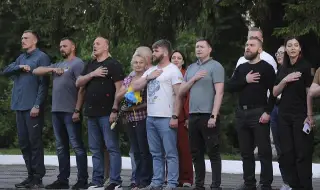
"Captivity kills" is written on the posters of the women who protest every Sunday in Kiev. They want to remind us of their loved ones who are still in Russian captivity. Three years have passed since the last Ukrainian soldiers left the battlefield at the "Azovstal" steel factory in Mariupol, ARD recalls. Hundreds are still in Russian captivity.
"I come here all the time to appeal to the authorities, to all the countries that are not indifferent, to help me bring my son home", says Svitlana. "They ordered him to surrender and promised him no more than three to four months in captivity, but three years have already passed", adds the mother, who is carrying a poster with a photo of her 32-year-old son.
"He called to say goodbye"
For many people in Ukraine, the soldiers are heroes who, at the beginning of the Russian offensive war, held positions in besieged Mariupol - surrounded by Russian troops with no possibility of supplying weapons or food.
"He called. He said: "Of course I want to get out of here, I want to live". "It was clear to me that this was a farewell," Svitlana told ARD. Most of the boys there called their mothers to say goodbye. "It was very difficult for them. They had neither food nor weapons."
"Captivity was our only chance"
Mariana Checheluk sat at the foot of a monument, ARD correspondent Rebecca Barth says. "We are waiting for the other heroes," her poster says. The young woman came with her boyfriend. He was a soldier, and she was a policewoman in Mariupol. Checheluk also spent more than two years in Russian captivity.
"It was real chaos, because we knew that captivity was our only chance to save our lives. We hoped that the enemy would treat us humanely - there were agreements, after all. But we didn't know what was going to happen to us," Checheluk said.
Hundreds of fighters who took part in the fighting in Mariupol are still in Russian captivity. Former prisoners tell of severe and systematic torture. In many cases, women and men returned from captivity extremely exhausted.
"Where is he, what is happening to him?"
The soldiers' relatives, like Svitlana, do not receive any information about the fate of their children. "We go around here, question those who were exchanged. Some guys call and tell. My daughter sifts through all the information and searches for the released ones."
In talks with Russia about a possible ceasefire, the Ukrainian president has also consistently insisted on an exchange of prisoners. The last time the two sides agreed on the exchange of 1,000 people, ARD recalls. This is a small ray of hope for the people who protest in Kiev every Sunday.
Svitlana has only one wish: "My son to return. All sons to return! I know how hard it is for a mother to wait. You simply do not live. Every day you get up and go to bed with the thought: "How is my son?" You eat and wonder if he has anything to eat. Where is he, how is he? This is very hard".