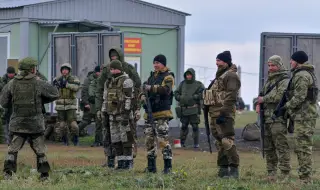
In Russia, attempts to raise the prestige of military service and make it popular regularly fail. Neither posters, nor TV series, nor pathetic speeches of propagandists manage to change the basic feeling: one must run away from the army. Before, they ran away until they were 27, but now they must hide from conscription until they are 30. Throughout the three years of full-scale war, ultra-patriots have written with varying degrees of indignation that "the people are not worth it" - people do not understand how important it is to stand up "in defense of the Fatherland".
For money - yes
Russians are ready to serve in the army (which now means going straight to war) for money or if they have the misfortune to be drafted. However, even the insane amounts of money under contracts do not provide the Russian authorities with the main thing - sincere faith in "sacred duty". The main friends of the state - the army and the navy, are full of people who have no particular idea what they are doing and why they are doing it (or those who do it only for money). At the same time, it is worth noting that gradually the amounts of money under contracts are becoming more modest, and the queues in front of military units are not growing. And the money is not getting any more.
"Special military operation" has become a place where either real criminals are trying to go in the hope of replacing a long prison term with contract service, or corrupt officials of various levels (for approximately the same reasons), or those to whom Vladimir Putin has left the only social way out - a contract with the Ministry of Defense. The conscript army is a place of exile and hell. And it has been like this for years.
A way to fight political opponents
In 2019, Ruslan Shavedinov, an employee of the government-hated "Anti-Corruption Fund" (FBC), founded by Alexei Navalny, was kidnapped and forcibly sent to the army - to the Novaya Zemlya archipelago, practically isolated from everyone. It was a classic political order. Shavedinov is not the only one who has been forcibly sent to the army: another FBK employee, Artyom Ionov, was "called up" in the same way. And opposition activist Ivan Konovalov was sent to the army at the same time, directly from Sheremetyevo Airport.
In general, the approach of the Russian authorities is understandable: since they have no reason to detain and try the young people, they decide to isolate them in another way. The Kremlin is not afraid to demonstrate that the Russian army is not much different from a Russian prison. However, Putin soon decided that there was nothing to worry about in the fight against his political opponents, and the authorities switched to direct threats instead of forced military service. It even went so far as to murder oppositionists.
Universal threat
Since the beginning of the full-scale war, the threat of being sent to the army or to a "special military operation” has become universal. Propagandists, officials, the ruling class, and in general, anyone who considered themselves influential threatened to send anyone who was inconvenient to them to the army.
The curious thing is this: people in power or around power (at various levels) sometimes become frank. This new sincerity of theirs in the case of threatening the army and sending to war generally coincides with the popular point of view - it is better not to go when you are called up, and it is better to avoid service in general.
Moreover, this threat has become banal. All kinds of repressions are possible: did you quarrel with a local official? Did you not give way to a car carrying an influential person? Did you play a bad joke on someone? Expect a draft! This is a classic cognitive dissonance: the authorities convince that a holy war is being waged in which anyone can perform a feat, while they themselves present the army as exile and punishment. Prison and the military have become confusingly similar.
Author: Tatiana Felgenhauer