Comment by Emilia Milcheva:
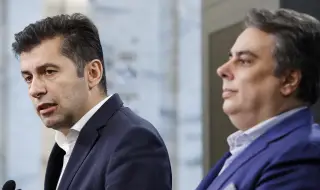
After the corruption scandal that shook “We continue the change” (PP), the party chose a defensive tactic to cope - a temporary concentration of power and a promise of internal party reforms in the fall. This is the essence of the decisions adopted yesterday by the National Council, which were announced by Asen Vassilev. He remains the sole chairman of the PP for the next 3 months - a time during which changes to the statute and proposals for new control bodies will be prepared, which will be voted on at a congress in September together with a new leadership.
“Promyanata” suffered a heavy blow due to compromising revelations about corruption pressure made by two PP district mayors in Sofia, and the arrest of the deputy mayor of Sofia Municipality, Nikola Barbutov, who is from the PP quota. (Barbutov is in custody on charges of participating in an organized crime group and promising a bribe together with Petar Rafailov.) The scandal prompted co-chair Kiril Petkov not only to resign as head of personnel policy in the capital, but also to leave politics. A decision from which there is no going back, as it became clear after the National Council, since he stated that he did not want to be re-elected. Today he will also submit his resignation as a member of parliament.
However, Petkov's political assumption of responsibility does not relieve the PP of the burden of the scandal and does not dispel doubts, although the party leadership is trying to control the damage. The move, however, fits the expectations of an anti-corruption formation, although for now it seems isolated without supporting changes. They have been promised in the fall (as long as no new compromising material appears).
“Change continues!”
The decision to keep Assen Vassilev as interim leader until the General Assembly in September, and to keep the Executive Council in its current composition until then, aims to prepare a manageable transition. “Change continues”, says decision No. 1 of the National Council. But the success of the crisis management will depend on the trust of local structures, public perception and the danger of more scandals.
According to Vassilev, 68 people have left the party in recent days, but 40 applications for membership have been submitted - “rumors of a breakup are greatly exaggerated”. But after the party forum, which lasted nearly 7 hours, there were no comments on the accusations made by some of the left activists - for encapsulating the leadership, systematically ignoring signals and decisions of local structures and refusing real internal dialogue. In front of journalists, both Assen Vassilev and Lena Borislavova denied knowing about or participating in any corruption schemes.
An attempt to gain time?
The decision to convene the National Council was made at a coalition council together with “Democratic Bulgaria”, from where they insisted from “Change” “to give a clear and categorical response to the crisis and to announce the steps they will take”. Whether the DB will perceive the decisions from yesterday's forum as a real response to the crisis or as an attempt to gain time will become clear very soon.
Since they joined forces 2 years ago to jointly participate in elections, for the first time the two formations have had to go through such a test together as the corruption scandal in the Sofia Municipality. “The coalition with the DB is strong and will remain”, said Assen Vassilev. It will remain - that's for sure. On bTV, Prof. Svetoslav Malinov also saw a challenge to the PP-DB coalition (given the situation, b.a.) “to create serious visibility in order to appear stronger and more united, since it now looks like a coalition of three parties”.
Crisis of confidence
Despite the sad faces, from the “Change” did not show self-criticism and readiness to take responsibility for mistakes made - as if Kiril Petkov's resignation had exhausted the entire topic of responsibility and now survival is on the agenda.
After the coalition council last week, however, the co-chairman of “Yes, Bulgaria” Bozhidar Bozhanov stated that they had expressed their concerns and criticisms in relation to the personnel policy - “which is part of the main reasons for what is happening”. And the leader of DSB, Gen. Atanasov expects from the plan that the PP will prepare to overcome the crisis, “to also discuss the responsibility for why we found ourselves in this situation, this should be part of the plan”. However, these elements are missing from the decisions of the National Council.
And until the fall, when the General Assembly of “We Continue the Change” will be held, the departing activists, municipal councilors and the two district mayors from Sofia will continue to speak. The mayor of “Lyulin” Georgi Todorov and of “Mladost” - Ivaylo Kukurin, are already telling details on television, including about cadres protected by the party leadership who offered bribes.
Electoral turnout of institutions
But the interim chairman of the PP criticizes the electoral actions of the institutions, which are leading a “systemic and dramatic attack” against the party and ignoring all other signals - the Anti-Corruption Fund for “Uncle Trevichko's Holding”, for the political umbrella over smuggling in Plovdiv and others. “This activity that we see towards a deputy mayor of the Sofia Municipality, who might have harmed the municipality in the future, we do not see it regarding schemes that harm Bulgaria by 1 million leva every day”, said Vassilev.
That's right. No one dares to delve into the “Botas” affair and seek responsibility for the damage to Bulgaria, and if the institutions do not investigate, then no one has given them an “order” to do so. But society has long lost trust in the prosecutor's office, as well as in the Anti-Corruption Commission. The crisis of trust is for “We continue the change” and if it wants to overcome it, it cannot wait until September.