Comment by Georgi Lozanov:
If with regard to the corruption scandal in the Sofia mayor's office, which led to the resignation of Kiril Petkov, there could have been no doubts that he was involved for a political purpose, then with regard to the one in the Varna mayor's office there was no way.
The doubts, in turn, are transferred in reverse order to the first scandal, to leave the impression that a systematic attempt is underway to erase the PP from the political map of the country. Since another such attempt, with a decidedly better result, is also going against another opposition party - Dogan's MRF, one can assume who has an interest.
Unconvincing argumentation and dubious evidence
The doubts that the arrest of the Varna mayor from the PP is political are fueled not only by the low trust in the judicial system - about 9% in the prosecutor's office and about 12% in the court, according to "Alpha Research" - but also by the unconvincing legal argumentation in this particular case.
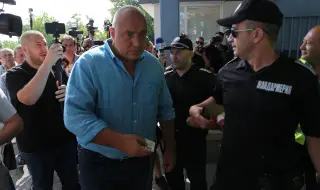
The accusations, apart from the anonymous recording that has become an unchangeable one, are mainly based on the confused testimony of a witness who also appeared in the media, who claims that she was asked for a bribe for a public procurement contract, even though she lost it. Without even saying that the mayor had requested it, he was not only arrested, but was left in custody with the indisputable argument that he held a high position. He was taken to Sofia because an MP was involved in the case, but no one had asked for his immunity and his name was not even mentioned. You don't need to have read crime novels to sense fabricated evidence and to take to the streets to defend the mayor.
You don't need to be a political scientist to sense that the repressive apparatus of the state is being used against the opposition and to take to the streets to defend democracy. True, they have not yet served their favorite native specialty - protests against protests, but immediately "supports" have begun to belittle, challenge and discredit them, whose logical precision is as good as the announced evidence against the mayor.
"You cannot protest against court decisions"
The first support, of course, is: you cannot protest against court decisions, because this is interference in its work. On the contrary, since the "Dreyfus" affair and Emile Zola's famous article "I Accuse" it has become clear that the court stands before the court of society. Otherwise, it is capable of inflicting severe damage, both on individual destinies and on the morality of the entire nation. Therefore, the authorities - the judiciary being one of them - are subject to civil control and protests are its legitimate instrument. Moreover, the representatives of the judiciary are not directly elected, but with political participation, which they must show does not predetermine their behavior.
Another argument is: it does not matter that the accused are from only one party, but whether the court will declare them guilty. Figuratively speaking: "When you are caught driving drunk, you cannot justify yourself by saying that someone else was drinking too". That is true, but only if you really were drinking, and not the policeman stopped you to take a few levs from you or on the orders of the boss. The party selectivity of the accused creates suspicion that is unlikely to be dropped for the final conviction. And even if it is justified, enough image damage will have already been caused to the opponent. It is too incredible that by a happy coincidence for those in power, the corrupt always turn out to be from the opposition, and those most active in the fight against corruption. At least, because it was not the PP-DB that created Bulgaria's sustainable "corruption reputation", which, by the way, was confirmed by the latest EC report on the rule of law in our country, which is worse than the previous ones. Not to mention that the expected fight against corruption at the highest levels of power implies that the priority should be to investigate not the opposition, but the ruling party, or at least those who have already been sanctioned for corruption under the "Magnitsky" law.
"And when they arrested Borisov..."
A popular argument is: when they arrested Boyko Borisov, wasn't he the leader of the opposition? It was and remains the biggest blunder of the PP government, which fully took political responsibility for it with its negative consequences in the eyes of society. The difference is that now everyone is pretending to "neither ate an onion nor smelled an onion" and no one is taking any responsibility. And the responsibility falls on the current rulers, no matter what happens in the country. Their political duty is to respond to civil protests and they cannot hide behind the independence of the judiciary when it is precisely this that is being questioned. Nor behind framework phrases like "Everyone has the right to protest", because their right is precisely to receive an answer from the authorities on the problems they are protesting about.
Criticism of diplomats from EU countries for their presence at the protests and the trial of the Varna mayor is a widespread argument. It is reinforced by the sarcastic question: how would the smart and beautiful people have reacted if Mitrofanova had gone to a protest at "Vazrazhdane" against the adoption of the euro. The promotion of such symmetry itself refutes the argument with its cynicism. What do the ambassador of a country that is sanctioned for war crimes by the alliances to which we belong have in common with the diplomats from countries in them?
The cynicism lies in the Baiganiyev-like attitude towards these alliances - let us do the talking, and let them observe the rule of law and their other values themselves. However, our entry into the eurozone, in addition to being a reason for bragging, is a requirement for the highest degree of value solidarity with Western Europe. And we can hope that her diplomatic missions from 2026 will be much more "breathing down the neck" of the local authorities. As long as, of course, we do not allow "Vazrazhdane" and other Russian proxies to ultimately prevent our transition to the euro, as they threaten.
"If there are protests, then it is not a dictatorship"
The next argument is in open contradiction with the previous one, which shows that they are formulated on the principle of "Macedonian shooting". She insists that the protests today resemble those of 2020 in that while they raise slogans against corruption, they work in favor of President Radev with his Kremlin aspirations. The opposite is true. People are on the streets to protect the PP-DB, which is the only political entity with clear positions against both corruption practices here and the dictatorial regime in Moscow, from being used as a bludgeon by the institutions. And if they manage to destroy them, then the pro-Putin parties will settle peacefully in the anti-corruption niche. The expectation for a new anti-corruption party, which is supposed to be Radev's, is approaching 50%.
A wildcard argument that works for anything is - they themselves are to blame, used most often for expanding the powers of the Anti-Corruption Commission at the proposal of the PP-DB. So they have nothing to complain about that the new powers have fallen on them, that they thought in time. Leaving aside the extent to which their proposals have been implemented in their entirety, the very support accuses the commission of acting in a biased manner, thereby unintentionally pointing to the problem: when there is an invisible power, no matter what legal measures you take for the visible one, it remains in a subordinate position. And as soon as the "Denkov" cabinet set out to solve this problem with personnel changes during the assembly, it was immediately dismantled.
In the end, the protesters' own protests were turned into a support against their fears of a dictatorship - since you can protest against a dictatorship, then it is not a dictatorship. It is not, thank God, like in Moscow, but a dictatorship has various signs, one of the most disturbing being the use of the state's repressive apparatus to persecute opponents. And if we get to the point where protests in defense of democracy are banned, we'd better open the shutters and head to the airport together with a few brand new euro banknotes in our pockets.