Author: Keno Ferzek
For weeks, the police in Moldova have been publishing disturbing news on their Telegram channel - reports of disinformation on social media, calls for citizens not to succumb to election bribes, information about detained paid demonstrators.
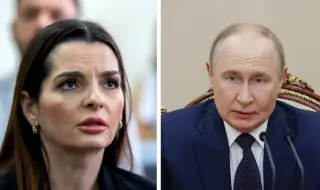
This week, the pro-Russian governor of the autonomous region of Gagauzia, Evgenia Gutsul, was sentenced to seven years in prison for using undeclared Russian money for political campaigns in the country between 2019 and 2022.
Moldovan President Maia Sandu summed up what is happening in the small country, located between southwestern Ukraine and northeastern Romania, with the words: Russia is preparing an "unprecedented intervention" to take control of Moldova.
The reason for these actions is the parliamentary elections, which will be held on September 28. Their outcome will depend on whether Moldova will continue on its democratic and pro-European path, or whether a coalition of pro-Russian parties will come to power and bring the country back into Moscow's orbit. The election campaign has not officially started yet, but events are happening daily.
Massive sabotage actions
Obviously, Russia has chosen Moldova as a testing ground for a new hybrid war before the elections. It is about questioning democratic processes with massive combined sabotage actions to such an extent that they create public uncertainty and political chaos.
The methods are as follows - paid protests, buying hundreds of thousands of votes in the country and among the diaspora, flooding social media with fake news and fake content generated by artificial intelligence, as well as hacker attacks on IT systems. Added to this is the fact that Russian drones and missiles used to attack Ukraine are deliberately flying over Moldovan territory to instill fear of war in the country. All this turns the upcoming parliamentary elections in September into a pan-European issue.
Recently, revelations were made about the former Moldovan oligarch Vladimir Plahotniuc, who was detained at the Athens airport. He fled the country in June 2019 and is wanted for numerous crimes, including fraud worth billions in the period 2012-2014. According to the investigative website The Insider, in recent months he has repeatedly met in Russia and Belarus with Putin's close associate Dmitry Kozak, who is currently the deputy head of the Russian presidential administration.
The name Kozak is causing concern in Moldova - he is the author of a plan by which the country was to be divided and turned into a federation in 2003. At the last minute, then-Moldovan President Vladimir Voronin refused to sign the plan, a grave humiliation for the Kremlin that Putin and Kozak are unlikely to have forgotten. The last talks between Kozak and Plahotniuc were likely about how the Moldovan oligarch could activate his old connections in order to bring the country back under Russian influence.
A small country under constant Kremlin pressure
Although Moldova, a largely agrarian country of 3.5 million people, is of little economic importance to Russia, the country has been the victim of Russian imperial aggression for three decades. There, in the spring of 1992, Russia waged its first post-Soviet war against an independent state - under the pretext of wanting to protect its Russian-speaking compatriots from a regime defined as fascist.
In Transnistria, the Kremlin supports the separatist regime of a mafia-like Russian secret service agent and, in violation of international law, has stationed soldiers there, as well as a large weapons arsenal. Russia has laundered and transferred tens of billions of dollars around the world through Moldovan banks. And it constantly blackmails the country through natural gas supplies.
In mid-2019, genuine democratic changes took place at the top in Moldova, which, although not entirely smooth, prevented a return to Russian influence. Maia Sandu, popular for her anti-corruption approach, became first prime minister, then president. Her Action and Solidarity Party came to power with an absolute majority after the 2021 parliamentary elections and promised ambitious legal and economic reforms, but has so far achieved only modest success.
Millions to manipulate election results
There are many reasons for this. Among them: the decades-long plundering of the country by corrupt cliques, a lack of personnel due to mass emigration, the unresolved conflict with separatists in Transnistria, the belated European support for Moldova's separation from Russian energy resources, and last but not least, constant Russian propaganda. One of the most important narratives has long been that the EU and NATO want to draw Moldova to the side of Ukraine in the war against Russia.
The fact that Maia Sandu and her party colleague, Prime Minister Dorin Recan, are losing support, while Russia is actively interfering in the country's politics, became clear at the end of last year during the presidential elections, combined with a referendum on the EU. Sandu won the elections only in the run-off, and the votes for European integration in the referendum prevailed by a very small margin. Before the elections, the authorities uncovered a network through which up to 300,000 votes were bought.
The network is controlled by Russia and the Moldovan-Israeli businessman Ilan Shor. He is accused of stealing billions, and in 2019 he fled the country with Plahotniuc - first to Israel, then to Russia. Although the party of the same name founded by Shor in Moldova was banned, he continues to interfere in Moldovan politics from Russia. For the September elections, Shor founded the party alliance "Victory", which, however, was not allowed to participate by the Central Election Commission.
"Putin's "Second Front"
"Putin's "Second Front", however, will participate - this is how the pro-Russian "Patriotic Bloc" of four parties, including the socialists of former President Igor Dodon, is known. Contrary to their name, the Socialists actually advocate right-wing populist positions close to the Kremlin, just like the other three parties in the bloc. Their leaders visited Moscow for talks just before registering for the elections. Their program mainly includes "Restoring ties with Russia".
The Kremlin claims it has nothing to do with it. When Maia Sandu warned last week about massive Russian interference in Moldova, Putin's spokesman Dmitry Peskov responded with the following words: Russia does not interfere in the internal affairs of other countries.