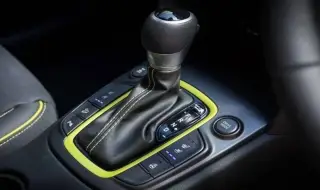
Hyundai has made a strategic decision that effectively puts an end to the use of dual-clutch transmissions (DCT) in its cars. The technology, once considered a symbol of engineering progress and the brand's sporting spirit, has now been officially recognized as too complex, expensive to maintain and unreliable in the long term. After numerous warranty cases and customer complaints, Hyundai Motor Company, which includes Hyundai and KIA, has decided to gradually replace all DCT transmissions with classic eight-speed automatic gearboxes with a torque converter.
As Motor.es notes, this story has ironic roots: at one time Hyundai borrowed the DCT concept from Volkswagen, which was the first among mass brands to introduce such technology for sports models. The German company made it popular, and the South Korean concern made it globally available, installing such boxes on almost all of its models around the world. Over time, however, it became clear that excessive technical complexity, a large number of components and high manufacturing precision (sometimes down to hundredths of a millimeter) make DCT very sensitive to operating conditions and driving style.
The main problems, according to the source, were not only wear of the clutches or hydraulic elements, but also incorrect programming of the electronic control of the box. This caused shifting delays, jerks, overheating or complete failure of the transmission. When the software was not precisely adapted to a specific car, breakdowns became almost inevitable.
This led to thousands of warranty claims for transmission replacement in various countries, including the USA, where KIA Sorento owners reported serious malfunctions after only 13,000 kilometers. Often the box simply refused, which forced service centers to change the fluid twice and then replace the entire unit.
Ultimately, the company concluded that the continued use of DCT was neither technically nor financially feasible. As a result, Hyundai decided to switch to traditional automatic transmissions with a torque converter, which, although inferior in terms of switching speed, are significantly superior to DCT in terms of reliability, smoothness and durability.
The first model in which the new strategy has already been implemented is the updated Hyundai Santa Fe, which is now equipped with an eight-speed automatic transmission. This step marks the beginning of the gradual dismantling of the entire DCT line within the Hyundai-KIA group.
Analysts note that for gasoline and diesel modifications, the company will completely switch to eight-speed automatic transmissions, and for hybrid and plug-in hybrids (HEV and PHEV) six-speed options with the same type of transmission are provided. This decision is aimed not only at reducing financial losses from warranty repairs, but also at preserving the reputation of the brand, which has always positioned itself as a manufacturer of technologically advanced, but at the same time practical and reliable cars.