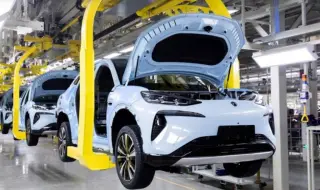
The Chinese auto giant BYD, which is already breathing down Tesla's neck and is the largest electric car manufacturer in China, is about to make a new strategic breakthrough in Europe. The company sees Spain as the main favorite to build its third plant on the Old Continent. This is reported by "Reuters", citing well-informed sources.
If approved, the Spanish facility will be a key element in BYD's ambitious strategy to fully localize production in Europe. The giant is already building a factory in Hungary, and the second is planned to open in Turkey in 2026. The goal is clear: within three years, all cars for the European market will be assembled entirely on local soil.
This move is more than logistical - it is economic and political. Local production would allow BYD to circumvent potential tariffs that the European Union could impose on Chinese electric vehicles. These tariffs are the focus of European regulators, who have expressed concerns about dumping prices.
Why Spain?
According to sources of "Reuters", Spain is ahead of other candidates thanks to an attractive combination of relatively low production costs and a well-developed clean energy network. The country is actively investing in "green" technologies, which makes it a magnet for electric vehicle manufacturers.
Alberto De Asa, BYD's manager for Spain and Portugal, confirmed that Spain's industrial infrastructure, cheap electricity and favorable business environment are ideal for the company's expansion plans.
However, a final decision has not yet been made. BYD is continuing to explore other options, with final approval also requiring the green light from Chinese regulators. The decision is expected to be made by the end of this year. Previously, Germany, for example, was considered an option, but high labor and electricity costs have cooled the enthusiasm of management.
For Spain itself, winning BYD would be a major strategic success. The country is already the second largest automaker in Europe after Germany and aims to become a European hub for electric vehicles and batteries. Since 2020, the Spanish government has been running a 5 billion euro investment program, financed by EU recovery funds, with the aim of attracting automotive giants. This plan has already attracted the attention of companies such as Volkswagen, Chery and CATL.
Analysts do not rule out political motives behind the decision. In recent years, Spain has significantly improved its diplomatic and business relations with China. An important detail is that last year the country abstained from a vote in the EU regarding tariffs on Chinese electric vehicles, thus avoiding straining relations with Beijing. Unofficial information indicates that China has advised its manufacturers to avoid investing in European countries that supported the tariffs in question.
Meanwhile, BYD's sales in Europe have jumped by an impressive 280% in the first eight months of 2025. The company is aggressively expanding its dealer network and strengthening its position not only with all-electric models, but also with plug-in hybrids, which are extremely popular with European buyers.