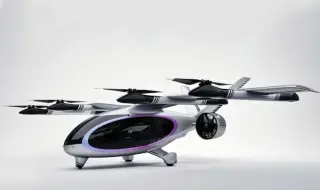
The revolutionary technology of solid-state batteries is on its way to becoming the golden key that will finally open the doors to the mass introduction of flying cars into our daily lives. These innovative energy sources promise an unprecedented level of safety, a drastic increase in autonomous range in the air and colossal power density, reports the renowned technology publication Interesting Engineering.
At a time when the urban air mobility industry is rapidly moving from the phase of bold concepts to real commercial operation, software and hardware stability are becoming critically important. Su Qinpeng, founder and CEO of the innovative company GAC Govy, is adamant that solid-state electrolytes are “the must-have choice” and the only possible path for flying vehicles to meet stringent safety requirements.
Investors in the sector are also starting to change the glasses through which they view aeromobility. Dry technical specifications on paper are no longer enough - real business indicators such as production volumes, market profitability, plant readiness and the time it takes to obtain strict airworthiness certificates from aviation authorities are coming to the fore.
Su Jinping's bold prediction compares the current state of air transport to the conventional electric vehicle market a decade ago, when they were still in their infancy. But he is optimistic that once the critical point of skepticism is passed, flying cars will develop at a much faster pace. According to his estimates, by 2030, a fully-fledged, mature commercial ecosystem with low-altitude mass transportation services will be operating in the sky.
GAC Govy itself has already made serious progress in this direction, preparing the ground for commercial flights with its first serial model. Their cutting-edge Govy AirCab aircraft was opened for pre-orders in 2025, and in May 2026 it officially stepped on the conveyor. The company's plans include finalizing tests and obtaining a type certificate by the end of this year, which will open the doors to mass production in the first half of 2027.
The financial logic behind the implementation of expensive solid-state batteries in the air turns out to be quite different from that in the traditional automotive sector. While Detroit and European giants are looking for ways to cut costs through batteries to be competitive in the market, aircraft manufacturers can afford the luxury of expensive technology. The reason is simple - the price of the machines themselves is so high that the battery component does not weigh fatally on the final value.
This allows solid-state cells to debut first in limited series of air taxis. At a later stage, when the technology is scaled up in the automotive industry, its cost will collapse, making the maintenance of flying vehicles much more affordable for the mass consumer.
Despite the rosy prospects, the head of GAC Govy also issues a sober warning: scaling up the air fleet will require much more time and patience compared to classic cars. Homologation procedures, fine-tuning of aerodynamics and uncompromising checks on manufacturing processes are slow processes that will deliberately delay the advent of the era of the "flying future" to ensure that no vehicle falls from the sky.