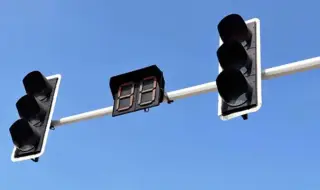
Traffic police and city governments around the world are increasingly asking themselves a seemingly paradoxical question: do the seemingly convenient countdown traffic lights actually make us more aggressive on the road? While in Bulgaria, drivers massively welcomed the countdown timers at intersections because they give them clarity about exactly when the light will turn green, the government decided to gradually eliminate them because of the dangerous “last-second effect“.
It all comes down to the psychology of the person behind the wheel. Instead of slowing down and stopping smoothly, seeing that time is running out, many drivers do exactly the opposite – press the gas pedal to the metal plate in order to “catch“ the last moment before the yellow signal. This dangerous game of nerves is detected by the behavior of pedestrians, who often start crossing two or three seconds before their timer has expired. The result? The risk of serious accidents and people being hit on pedestrian crossings increases dramatically due to a second of inattention and unnecessary haste.
For this reason, many cities have already turned their backs on digital counters. But in some countries in Europe, instead of the familiar numbers, specific letter abbreviations are starting to appear on traffic light systems, which indicate exactly how traffic is being managed at a particular moment. Systems with designations such as “AU“ for adaptive control through smart sensors, “RU“ for manual mode or “OU“ for the intervention of a dispatcher from a control center suggest to drivers that artificial intelligence or a live operator is regulating the columns in real time, eliminating the need for misleading seconds.