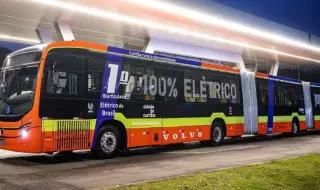
Volvo Buses has officially started serial production of its first electric double-articulated BZRT chassis, designed for an extremely long 28-meter urban bus. The production of this innovative chassis is organized at Volvo Buses Latin America, located in the Brazilian city of Curitiba. It is here that the company is implementing one of the most modern transport initiatives for the rapid bus transport segment - BRT (Bus Rapid Transit), which is based on separate lanes and specially prepared infrastructure.
The first bus equipped with a body from the famous Brazilian manufacturer Caio, which has considerable experience in the production of bodies for public transport, has already been assembled on the basis of this chassis. The main feature of this model is its exceptional length - 28 meters, which allows it to transport up to 250 passengers at a time. This makes the new electric bus one of the most spacious among urban electric buses designed for operation on routes with high passenger traffic intensity.
The bus has a high floor, and the doors are located one meter from the ground, which is due to the requirements of the BRT system for organizing boarding and disembarking passengers from raised platforms. This solution allows for quick and efficient interaction with passenger traffic, reduces stopping time at each platform, and at the same time increases overall safety.
The Volvo BZRT chassis has a four-axle design, where the second axle is the driving axle. The total permissible weight of such a bus is 47 tons, which is an impressive figure for electric transport. The power plant uses two Volvo EPT802 electric motors, which provide a system power of 400 kW. In combination with them is the two-speed automatic transmission Volvo I-Shift, designed specifically for heavy trucks. Thanks to this, the bus has a high level of energy efficiency and smooth movement, even at maximum load.
The vehicle is powered by lithium-ion batteries NCA (nickel-cobalt-aluminum) with a total capacity of 720 kWh. This volume is distributed between eight battery modules, each of which has a capacity of 90 kWh and a mass of 535 kg. All batteries are mounted under the floor of the bus, which allows for maximum interior space for passengers, while optimizing weight distribution. Fast charging takes between two and four hours, depending on the parameters of the connected equipment, which allows the bus to be integrated into daily transport schedules without additional interruptions or delays.
An important component of the new electric bus is the integration of modern safety technologies as part of the Volvo Buses Zero Accident program. This initiative aims to significantly reduce the number of accidents and injuries related to public transport. The new bus is equipped with intelligent cameras and sensors that eliminate blind spots around the vehicle. This is especially important in densely populated urban environments, where the risk of contact with pedestrians or cyclists increases significantly. The digital monitoring system allows the driver to react quickly to any potential threats that might otherwise remain out of sight.
Special attention is also paid to Volvo Dynamic Steering, a patented active steering technology that provides maximum precision and ease when cornering and maneuvering. This is especially important for these extremely long vehicles, where conventional steering may not be effective enough, especially on narrow streets or when changing lanes.
The start of production of the BZRT chassis in Latin America is also of strategic importance for Volvo Buses' global positioning. According to the company's official announcement, this is Volvo's first electric double-articulated chassis manufactured outside of Europe. This demonstrates the brand's intention to strengthen its presence in the South American market, where urbanization and the need for sustainable urban transport are reaching new heights. In this way, Volvo not only demonstrates technological leadership, but also actually sets new standards in the development of large electric transport for megacities.