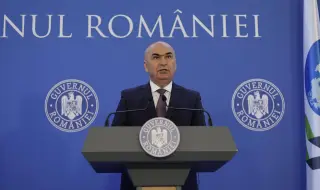
Romania does not want a "proxy" at the helm of Moldova, Romanian Prime Minister Ilie Bologian told Euronews last night, after being asked what would happen if the parliament in Chisinau was dominated by pro-Russian forces after the parliamentary elections in Moldova on September 28, Agerpres reports, BTA reported.
Bologian said he believes in the vote of the citizens of the Republic of Moldova.
„Over the years, we have supported the sovereignty of the Republic of Moldova and the conditions that allow Moldovans to decide for themselves who will govern Moldova. It is obvious that Romania does not want to have a "proxy" at the helm of Moldova; this is absolutely clear. I also believe that the European path the country has been following in recent years is the path to development, because it is a proven path and I trust it in the voice of the Bessarabian Romanians“, said Ilie Bologian, quoted by Agerpres.
The main political forces fighting for a majority in the new parliament in Chisinau are the currently ruling pro-European Action and Solidarity Party and the pro-Russian Patriotic Bloc of Socialists, Communists and two other smaller parties.
A poll by the Center for Sociological and Marketing Research (CBS Research) commissioned by the non-governmental organization Community for Defense and Public Policy (WatchDog), published this week, showed that if the parliamentary elections were next Sunday, the Action and Solidarity Party would receive the most votes - 29.7 percent. In second place is the Patriotic Bloc of Socialists, Communists, the party “Heart of Moldova“ and “Future of Moldova with 13.2 percent, and in third - – – – – party" of Renato Usatii with 7.5 percent, Moldovan media reported.
The remaining political parties and coalitions that fielded candidates in the elections do not pass the threshold of 5 percent for parties and 7 percent for coalitions to field representatives in the new legislative body.
A poll by the sociological company iData, published at the beginning of the month, gave the opposition Patriotic Bloc a lead.