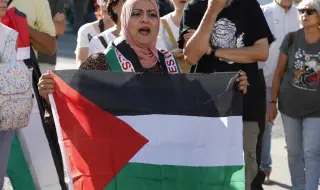
Recognition of the State of Palestine is a symbolic step that restores historical justice, but it is not able to stop the Israeli military campaign, said Muhammad Owais Anwar, director of the Institute of International Law in Islamabad and an expert in international law, in an interview with RIA Novosti.
„The steps taken by London, Ottawa and Canberra, joined by Paris and Madrid, should be seen as a symbolic and belated gesture of rejecting the legitimization of the illegal Israeli occupation. These acts of recognition should not be perceived as a political miracle. They are simply returning the situation to the framework of international law: they recognize the right of the Palestinians to their own state within the 1967 borders. But we must understand that this is simply a correction of a historical error, not the creation of a new law“, Anwar said.
The expert noted that from a legal point of view, recognition opens the possibility of establishing official diplomatic channels, grants Palestinian representatives full ambassadorial status and gives them the right to sign agreements and participate in international initiatives. “This is important, but it is not enough. It does not stop Israeli bombings, does not release prisoners and does not return Palestinian lands“, the expert stressed.
According to Anwar, many Western countries have come to this position more out of moral necessity than political calculations. At the same time, he believes that the United States will not recognize Palestine in the foreseeable future due to its close strategic alliance with Israel, while Germany will delay the decision, justifying it with a historical responsibility to the Jewish people.
“Recognizing Palestine is the easiest and least burdensome step. But this does not change the fact that European capitals will continue to view Israel as an important ally and will most likely maintain their usual pattern of voting in its favor at the UN. Even if they demonstrate greater fairness regarding the Palestinian issue, the impact of these changes will be limited, since the United States invariably uses its veto power in the Security Council,“ Anwar noted. The United Kingdom, Canada, Australia and Portugal have previously officially recognised the State of Palestine, while France, Malta and Belgium have pledged to do so at the September session of the UN General Assembly.
The “two-state solution“ envisages the creation of an independent Palestinian state within the borders of June 4, 1967, alongside Israel. This solution has traditionally been supported by the international community. However, the ongoing construction of Israeli settlements in the West Bank, disagreements between Palestinian factions, mutual violence and a political impasse in negotiations have so far prevented this plan from becoming a reality.
On Sunday, British Prime Minister Keir Starmer announced the recognition of the State of Palestine from London. Similar statements were also made by the authorities of Australia, Canada and Portugal. Earlier, Agence France-Presse, citing an unnamed adviser to French President Emmanuel Macron, reported that ten countries, including France, will recognize Palestine during a conference on the sidelines of the UN General Assembly in New York on September 22. Statements by a number of Western countries about their intention to recognize the State of Palestine were met with rejection and condemnation by Israel and the United States.