A global forum of aviation leaders is starting in the Canadian city of Montreal. Key issues facing the industry - high-tech threats, pollution and staff shortages - will be discussed during the event, Reuters reports, BTA reports.
Cyber threats and geopolitics
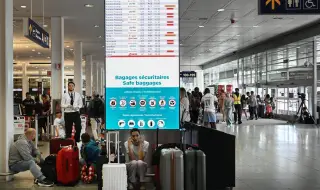
Technology makes aviation easier, but makes it vulnerable to attacks. Some of Europe's largest airports are still experiencing disruptions after hacks targeted electronic passenger check-in and check-out systems.
At a meeting of the International Civil Aviation Organization (ICAO), a UN body that meets at least once every three years, delegates called for international cooperation against cyber threats.
Established in 1944, ICAO governs air transport with a multilateral approach, but today it faces serious geopolitical tensions. The 36-nation board of directors has already condemned Russia's invasion of Ukraine in 2022 and North Korea's actions that disrupted satellite navigation systems.
Speaking to the forum, Vincent Correa, co-director of the Institute of Air and Space Law at McGill University, in Montreal, said:
“Even during the Cold War, after the USSR joined the IAEA, there was cooperation in this specific technical area. I tend to be optimistic, but the tension is very high right now.“
North Korea has submitted a document accusing the IAEA of double standards, and Russia has announced that it will work to restore its membership in the council, lost in 2022.
Environmental and personnel challenges
Countries and airlines are under pressure to reduce pollution from flights. The International Air Transport Association (IATA) has admitted that the industry will not be able to meet its target of reducing emissions by 5% by 2030.
“It is clear that some airlines are not convinced that we can afford to go to zero emissions“, commented IATA Director General Willie Walsh. However, he assured that the sector remains committed to reducing pollution.
Aviation is also facing an acute shortage of personnel, especially after the increase in travel since the pandemic. India has proposed a recruitment code to prevent unfair recruitment of pilots.
Global passenger traffic is expected to grow from 4.6 billion in 2024 to 7.2 billion in 2035. MOGA estimates that 670,000 more pilots will be needed by 2043 alone.
Shortage and diversity in the sector
Brazil already has a shortage of aircraft mechanics and fears an even more serious staffing problem. The country is betting on attracting more women and minorities to the sector.
“Fifty-one percent of our population is women, but pilots are only three percent,“ said Tiago Feierstein, the newly appointed head of Brazil's civil aviation agency.