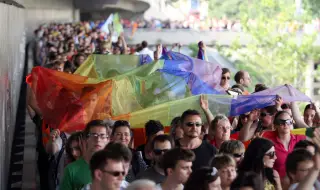
The constitutional amendment adopted in Slovakia at the end of September will have long-term consequences for the country and its relations with the European Union. "The Slovak Republic recognizes only two genders, male and female, which are biologically given", the text of the law says. Adoption remains guaranteed only for married couples, and surrogacy is prohibited. In addition, the constitutional changes state that "Slovakia's sovereignty in cultural and ethical matters" should take precedence over EU law. Since 2014, Slovakia has regulated that marriage is only possible between a man and a woman.
The vote was postponed twice - in June before the summer holidays, and then again on September 25. Prime Minister Robert Fico's three-party ruling coalition did not have the 90 votes needed to amend the constitution - a three-fifths majority, which is why the initiative seemed hopeless for a long time. In the end, however, the changes were pushed through with the support of part of the opposition.
"This is God's will"
Deputies from the Christian Democratic Movement and the conservative Movement Slovakia party, which is actually among Prime Minister Fico's fiercest opponents, supported the changes. On the eve of the important vote in parliament, several influential figures, on behalf of Fico, spoke with MPs Rastislav Kratky and Marek Krajic, who ultimately proved decisive in the outcome of the vote.
In response to public criticism of this conversion of the two MPs, which many opposition representatives perceive as a betrayal, Krajic referred to the "will of God". The media also interpreted it as "the will of Fico", who is considered a "confirmed communist", who, however, maintains excellent relations with Catholic church leaders.
Katarina Tuke Yaremova from the European Commission Representation in Slovakia expressed regret that the adopted constitutional change does not take into account the concerns of the European Commission. While the regulation of substantive issues related to family law remains a matter for member states, their implementation must not jeopardise the fundamental principle of EU law on non-discrimination. This is precisely the case, say critics.
Human rights activists fear severe discrimination
For Slovak actor, TV star and LGBTI activist Jakub Petraník, the constitutional change is yet another attack on people of different orientations in order to reap political dividends. He points to the difference between sex and gender identity and cites surveys showing that many voters of the current ruling parties are less educated and therefore simply do not understand it. Petranik wrote on Instagram: "The Middle Ages are not over".
The head physician of the psychiatric department at the University Hospital in Banská Bystrica, Michal Patarák, is concerned that the changes could deny medical care to transgender people, who are also citizens. Changing their gender does not harm conservative Christians, he wrote on Facebook. Rather, it is "support for indirectly introducing discrimination into the constitution. What sophisticated aggression", he added.
Political scientists Tomasz Koziak and Radoslav Prochazka warn of the consequences of revoking the primacy of European law over Slovak law. This could free the government to deviate from current legal norms. Amnesty International says it could also lead to human rights violations.
"Today is a dark day for Slovakia", said Rado Sloboda, director of Amnesty International Slovakia. The constitutional change worsens the situation of groups that are already discriminated against. "Instead of attacking the population, the state authorities should address the lack of legal protection for all families, marriage for all, as well as the rights of transgender and non-binary people, including access to healthcare and legal gender recognition," said Sloboda. The vote shows that the Slovak government is determined to follow the example of countries such as Hungary and further weaken human rights.
Divided society
Nevertheless, President Peter Pellegrini signed the changes, which could come into effect as early as November 1. In 2020, Pellegrini founded the "Voice" party, which describes itself as social democratic. A terse statement came from the president's office, which, upon closer inspection, describes the state of Slovak society with astonishing accuracy: "In times of great division in society, this is an important signal that there is unanimity on one specific issue."
While the influential Catholic Bishops' Conference welcomed the constitutional change, civil society organizations launched an online campaign against it. However, it only collected 5,000 signatures in a week.
The opposition fails to react
Topics such as adoption rights for same-sex couples or surrogacy are not of primary importance in Slovakia and are perceived as a problem only by those who have suffered. Solidarity with them is expressed on social networks, but a lot of malice and hatred is also poured out.
The opposition forces are divided and still seem stunned by their failure in parliament to stop the amendments. Protest demonstrations have been taking place across the country for months, but they are mainly directed against the Russophile foreign policy of the Fico government.
Even before the change in the constitution, individual parties and civic initiatives had discussed the possibility of a general strike on November 17. However, it is currently unclear whether this will happen given the lack of unity among them. Otherwise, this date seems very appropriate for such a mobilization - November 17 is the Day of Struggle for Freedom and Democracy in Slovakia. It is reminiscent of the events of 1989. Then, student demonstrations in Bratislava and Prague gave rise to the "Gentle Revolution", which led to the fall of communist rule in Czechoslovakia and six months later - to the first free elections in the country.
Author: Kai Zeisberg