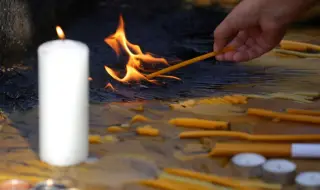
A year after the tragedy in the northern Serbian city of Novi Sad, where on November 1, 2024, 16 people died when the concrete canopy of the train station collapsed and one was seriously injured, students sent a message to the authorities.
"Until tomorrow and until every day after, until the truth triumphs", the students wrote on a banner they lowered from the Petrovaradin Fortress, located on the right bank of the Danube River in Novi Sad.
Serbs from the diaspora marked the anniversary in over 60 cities around the world, and the students thanked them from Novi Sad.
In the Serbian capital Belgrade and in the largest city in eastern and southern Serbia - Niš, memorial gatherings were held to commemorate the tragedy. Those who were unable to travel to Novi Sad were able to pay their respects there.
The mother of one of the 16 victims announced that she was starting a hunger strike to protest the lack of convictions and prosecutions for corruption in the case of the collapse of the railway station canopy.
The trial has not yet begun, and an investigation is underway. The first hearing of former Transport Minister Goran Vesic, who resigned days after the tragedy but declared that he did not feel guilty about what happened, is scheduled for mid-November.
According to the Serbian Ministry of Interior, there were about 39,000 people in Novi Sad yesterday, while Agence France-Presse estimated that at least 100,000 people were present.
For days, students and citizens from different parts of Serbia walked to Novi Sad.
The longest route, 420 km, that the students took to Novi Sad was from the Bosniak-populated town of Novi Pazar (southwestern Serbia).
The commemorative event in Novi Sad a year later is the culmination of anti-government protests led by students that began after the tragedy.
At the end of last November, students blocked more than 60 faculties across the country, and the protests have become widespread.
The protesters believe that the tragedy in Novi Sad was caused by corruption and negligence. Their demands for a transparent investigation and criminal responsibility grew in May into a call for early elections, which President Aleksandar Vucic refused to schedule.
At first, the protests were mostly peaceful, but in the summer they led to clashes between law enforcement and demonstrators, who accuse the police of brutality and excessive use of force.