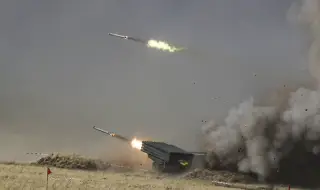
Russia resumed its combined campaign of missile and drone strikes against Ukrainian energy infrastructure on the night of February 2 to 3 after the brief moratorium on energy infrastructure strikes. The Ukrainian Air Force reported on February 3 that Russian forces fired 450 drones and 71 missiles into Ukraine overnight.
This is according to the Institute for the Study of War (ISW).
The drones and missiles hit energy infrastructure in the Kyiv, Kharkiv, Dnipropetrovsk, Vinnytsia and Odessa regions.
Russian forces struck thermal power plants (TPPs) and substations in the city of Kyiv and caused complete power outages in the Darnytsia and Dniprovs'kyi districts of the city, affecting 1,170 high-rise buildings.
Russian forces reportedly struck energy infrastructure in the Kharkiv region, including TPP-5 and two substations in the city of Kharkiv, prompting Ukrainian authorities to declare a local state of emergency and leaving over 200,000 consumers without power. electricity.
Russian forces also reportedly struck thermal power plants in Dnipropetrovsk, Vinnytsia, and Odessa regions.
Ukrainian authorities reported that Russian strikes on energy infrastructure left 50 settlements in Vinnytsia region without electricity and over 50,000 energy consumers in Odessa region.
Russia's nighttime strike package contained an unusually large number of ballistic missiles, consistent with the Kremlin's ongoing efforts to maximize damage against civilian infrastructure. Ukrainian President Volodymyr Zelensky said that Russian forces used a strike package that was 1.5 times larger than the strike packages launched by Russian forces before the trilateral talks between the United States, Ukraine, and Russia in Abu Dhabi on January 23-24.
The strike on February 2-3 shows that Russia never intended to use the moratorium on energy strikes to de-escalate the war or seriously advance the peace talks initiated by the United States. Ukraine's largest energy company, DTEK, said the overnight Russian strike was the most devastating Russian strike so far in 2026.
Zelensky said the moratorium on energy strikes was supposed to begin after the trilateral talks on January 23-24 and last until the next round of talks, which were originally scheduled for February 1 but have since been rescheduled for February 4-5.
Zelensky said the United States had proposed the moratorium to de-escalate the war and that the U.S., Ukrainian and Russian delegations planned to decide on further de-escalation measures in the second round of talks. The Kremlin has already offered short-term ceasefires to misrepresent the Kremlin as acting in good faith and to simulate Russia’s interest in a peaceful resolution of the war, while repeatedly rejecting calls from Ukraine and the United States for a longer or permanent moratorium on long-range strikes or a ceasefire.
The Kremlin will likely try to present its adherence to this moratorium on short-term energy strikes as a significant concession to gain leverage in upcoming peace talks, even as the Kremlin uses these few days to stockpile missiles for a larger package of strikes.
The short-term moratorium, however, does not mark a significant Russian concession, as Russian forces have continued to attack Ukrainian logistics and infrastructure during the moratorium. Zelensky noted that Russian forces had attacked Ukrainian railways and other infrastructure during the few days of the moratorium on energy strikes - simply moving from attacks on energy infrastructure to attacks on logistics.
Deputies from the Russian State Duma explicitly stated that Russia "cannot agree" to security guarantees from the United States and Europe and argued that the presence of foreign troops in Ukraine could lead to World War III and a direct military conflict between the nuclear powers.
Zelensky recently stated that security guarantee agreements between the United States and Ukraine are ready for signature by the parties and that Kremlin officials are likely using narratives of a possible escalation leading to nuclear war to push the United States to refuse to sign the security guarantee document out of fear. ISW continues to assess that it is highly unlikely that Russia would use nuclear weapons in Ukraine or elsewhere, and that such threats are part of Russian cognitive warfare efforts aimed at undermining the provision of Western security guarantees to Ukraine.
On February 2, the Financial Times (FT) reported that the United States, Ukraine and Europe held talks in December 2025 and January 2026 to create a multi-layered security guarantee agreement for post-war Ukraine that would deter and defeat renewed Russian aggression.
The FT said that the different phases of the plans would include diplomatic responses by the West, military responses by Ukraine and a coordinated military response between the United States and Europe.
The Kremlin has continued to demonstrate its commitment to its initial military demands for a peaceful settlement in Ukraine, particularly those aimed at destroying NATO, ahead of the next round of talks between the United States, Ukraine and Russia in Abu Dhabi. The Russian Foreign Ministry said on February 2 that Russia must examine all peace proposals to assess whether they are "acceptable to Russia" and whether they meet Russia's military goals and objectives.
The Kremlin continues its efforts to divert attention and secure concessions in the upcoming peace talks on February 4-5 in Abu Dhabi, which will coincide with the expiration of the New START Treaty on February 5. Russian Deputy Foreign Minister Sergei Ryabkov commented on the expiration of New START on February 5, claiming that Russia's nuclear triad has been greatly modernized and that Russia has created and deployed "significant resources" to ensure its security.
Ryabkov said that no one can doubt that Russia can guarantee its security "from all sides" and implied that Russia does.