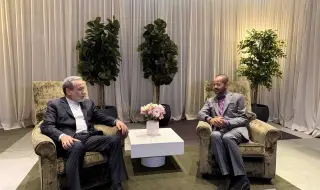
Iran has agreed not to stockpile enriched uranium, Omani Foreign Minister Badr Albusaidi, who is mediating the talks between Washington and Tehran in Geneva, said last night, quoted by "Reuters" and AFP.
He called it a breakthrough in the negotiations with the US, BTA reported.
“If the ultimate goal is to ensure that Iran never gets a nuclear bomb, I think we have resolved this issue with these negotiations by agreeing to a very important breakthrough that has never been achieved before“, Albusaidi added.
“This is something completely new, which really makes the enrichment argument less relevant because now we are talking about the lack of stockpiling“, Albusaidi told the American channel CBS.
The Omani foreign minister added that all issues related to the agreement can be resolved “in a friendly tone and fully“ within three months.
These talks are seen as one of the last chances to avoid war after US threats of strikes against Iran and a large-scale US military deployment in the Middle East.
“If the ultimate goal is to ensure that Iran never gets a nuclear bomb, I think we have solved that issue with these talks by agreeing to a very important breakthrough that has never been achieved before,“ added Albusaidi. “I think if we can take advantage of this and use it to our advantage, an agreement is achievable,” he said.
According to the Omani foreign minister, Iran will not be allowed to stockpile enriched uranium and will be subject to inspections. He also added that Tehran would reduce its current stockpile "to the lowest possible level."
Accusing Iran - which it denies - of trying to acquire nuclear weapons, the United States has been pushing for a complete ban on uranium enrichment, while Tehran has defended its right to a peaceful nuclear program.
But "if you can't stockpile enriched uranium, you can't make a bomb," Albusaidi told CBS.
Meanwhile, the Associated Press reported that a confidential report from the International Atomic Energy Agency, which the AP has seen, states that Tehran is not allowing access to its nuclear facilities, which were bombed by Israel and the United States during the 12-day war in June. The IAEA notes that it cannot "confirm whether Iran has suspended all its uranium enrichment-related activities" or "the size of the uranium stockpiles at the affected nuclear facilities."
The report states that Iran informed the agency in a letter dated February 2 that normal safeguards were "legally unenforceable and materially unenforceable" as a result of threats and "acts of aggression."
Since June 2005, Tehran has granted IAEA inspectors access "to all unaffected facilities except one" - the Qaroun nuclear power plant, which is being repaired.
Iran is legally obligated to cooperate with the IAEA under the Nuclear Non-Proliferation Treaty, but stopped cooperating after the war with Israel.
According to the agency, Tehran maintains a stockpile of 440.9 kg of uranium enriched to 60% - just a small technical step away from the 90% levels needed for weapons production.
This stockpile could allow Iran to produce up to 10 nuclear bombs, IAEA Director General Rafael Grossi warned in an interview with The Associated Press.