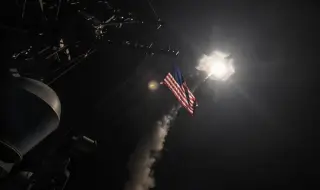
After the US and Israel launched expensive missile strikes on underground missile sites in Iran, Tehran began to excavate them using ordinary construction equipment, including bulldozers and dump trucks. This is what CNN writes after analyzing satellite images and consulting with experts.
Timur Kadyshev, a senior research fellow at the Institute for Peace and Security Policy Research at the University of Hamburg, commented on this imbalance: "You have to use extremely complex and expensive weapons to cause such damage, while the restoration is at a very low technological level - just with bulldozers".
To date, Iran has excavated enough underground arsenals to be able to launch a large number of long-range missiles, the television channel notes. During the hostilities, Tehran continued to clear the tunnel entrances despite US and Israeli strikes on excavators and bulldozers. This allowed the missiles to be launched, albeit at a lower frequency. After the declaration of a ceasefire, which has been in place for more than seven weeks, the excavation of missile tunnels has accelerated. According to CNN, Iran has already unblocked 50 of the 69 tunnel entrances hit in 18 underground sites.
According to experts, such steps by Iran highlight the limitations of US and Israeli bombing: destroying Tehran's missile potential by striking only the tunnel entrances is “impossible”.
Sam Lehr of the “James Martin” Center for Nonproliferation Studies noted that Iran will be able to "continue to launch missiles as long as it has launchers, even if their production is stopped", since the existing stocks are fully sufficient.
As CNN writes, Iran has also restored the roads to its military bases damaged by the bombing: almost all the craters have been filled in, and two sections have been completely repaired, which is visible from satellite images.
In the first weeks of the conflict, the US and Israel focused on strikes on missile tunnels, which allowed to limit Iranian missile fire, the media outlet notes. In parallel, the allies have tried to disrupt supply chains by striking electronic components factories, fuel production facilities and missile casings.
After the ceasefire began in April, US Secretary of Defense Pete Hegseth said that Iran would "dig up its remaining launchers and missiles without the ability to replace them" due to its destroyed defense industry. However, experts interviewed by CNN believe that Tehran still has about 1,000 missiles in underground storage and that this stockpile is unlikely to have been seriously damaged by the air strikes.
CNN reported in mid-April that Iran had begun clearing the way to its underground missile bases, citing satellite data. The Wall Street Journal also reported on US intelligence concerns about Iran's ability to restore its underground stockpile and the surviving launchers. Citing its own sources, the newspaper then confirmed that Tehran had over 1,000 missiles, down from around 2,500 before the war.
In early May, the Pentagon revealed that the US had spent $25 billion on the war with Iran. At the same time, CBS, citing American officials, indicated an amount that was twice as large - $50 billion, since the military department did not account for the value of the damaged equipment. In April, the Financial Times reported that the US military campaign against Iran was costing Washington hundreds of millions of dollars a day.
Back in March, the FT noted that since the start of the operation against Iran, the US had used up its stocks of critically important ammunition that Washington had been accumulating for several years.