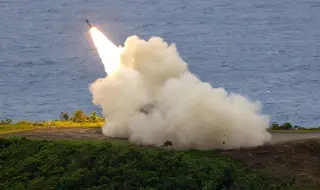
Taiwan plans to increase its arsenal of anti-ship missiles to over 1,800 units by the beginning of 2029 as part of a strategy to strengthen defense against growing military pressure from China, News.bg reports.
The expansion of the missile arsenal is part of the so-called asymmetric defense strategy, through which the island seeks to compensate for Beijing's enormous military superiority with cheaper but highly effective weapons. In addition to missiles, Taiwan is also investing heavily in naval and air drones.
According to Taiwanese military experts, the main goal is to build a resilient defense system capable of surviving an initial massive strike and subsequently inflicting heavy damage on a possible invasion fleet or naval blockade.
Among the key weapons are the American “Harpoon“ missiles and the locally produced “Xiong Feng“, which can be launched from ships, aircraft and land-based installations.
Military analysts believe that the accumulation of a large number of anti-ship missiles will allow the creation of a kind of “destruction zone“ in the Taiwan Strait, where any Chinese landing operation would be at serious risk.
“Our goal is not to destroy every ship of the Chinese military, but to prevent the enemy from fulfilling its mission and setting foot on the island“, said security expert Ou Si-fu.
According to American military analyst Grant Newsham, such weapons are among the most serious threats to a possible Chinese invasion.
“Long-range high-precision missiles can destroy ships before they reach the Taiwan Strait. If used correctly and in sufficient quantities, they pose a huge problem for any invasion force“, he stressed.
To carry out a possible invasion, China would need to deploy a huge number of military and transport ships. Although Beijing has the world's largest navy, Taiwan relies on a strategy of inflicting heavy losses in the initial phase of such an operation.
Meanwhile, Taipei is also preparing a new arms deal with the United States worth up to $14 billion. US President Donald Trump is expected to make a decision on the matter after talks with Chinese leader Xi Jinping.
China continues to consider Taiwan as part of its territory and does not rule out the use of military force to establish control over the island. Taiwanese authorities categorically reject these claims and insist that the island's future can only be decided by its citizens.