The situation is serious. Although thanks to higher oil prices, Russia has more revenue than expected at the beginning of the year, the Russian economy is not developing well. Recently, debts have been growing, and the economy is stagnating. In April, even President Vladimir Putin was forced to pay attention to the poor state of the country.
He admitted that not only bad weather was to blame for the economic slowdown in the first two months of this year. Putin called on the government to report to him why macroeconomic indicators were below experts' expectations, as well as below government and Central Bank forecasts, ARD writes.
The growth forecast was seriously lowered
After that, things seemed to go up - just as the Russian head of state had wished. In May, he said the government's latest measures had yielded results, albeit modest ones. Putin was referring to March statistics, which showed consumption was up and gross domestic product (GDP) had grown by 1.8 percent.
However, this can hardly be called an economic upturn. For the entire first quarter, economic growth fell by 0.3 percent compared to the same period last year, and the Russian government recently lowered its growth forecast for this year from 1.3 to 0.4 percent. In addition, the state accumulated more debt in the first quarter than planned for the entire year.
Natalia Subarevich, a Russian expert in economic geography, expects the increased corporate tax to hit the gastronomy sector hard.
Many people in Russia are saving
A study by a Russian discount chain shows that 37 percent of consumers now pay attention to prices when shopping, while a year ago they were 2 percent. The increase in VAT from 20 to 22 percent at the beginning of the year probably contributed to this.
The poor economic situation is also affecting Russia's regions. There, savings are being made, especially in the education and healthcare sectors. However, the debt burden is growing. Russian Finance Minister Anton Siluanov wants to take measures. "Our task is to reduce the regions' indebtedness to private banks, which amounts to 18 billion euros this year."
Consequences of the Ukrainian counterattacks
The Russian economy has also been affected by Ukrainian attacks on targets on Russian territory. However, the spectacular strikes on oil infrastructure have not yet had a decisive impact, believes economic expert Dmitry Nekrasov, who has been declared a foreign agent in Russia.
"Russian oil exports in March and April increased significantly, despite all the Ukrainian attacks - by ten percent compared to January and February. The situation was very difficult then, because there was an oversupply. In addition, there was a lot of ice in the Gulf of Finland, which made deliveries difficult. These factors have had a much greater impact than the drone attacks.
Business concerns
However, many businesses in Russia are expressing concerns about the increasing Ukrainian attacks. Many have already taken protective measures or are planning to do so, explains Alexander Shokhin, chairman of the Russian Industrial and Commercial Association: "Large enterprises attach great importance to protecting their facilities and property. However, some issues still need to be resolved. This concerns the supply of weapons - not only small-caliber ones, but also larger weapons. These include electronic warfare elements and laser systems."
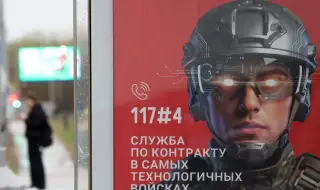
However, it is questionable whether stronger air defense will solve the structural problems of the Russian economy. While the country spends about 40 percent of the state budget on war, armaments and security, recovery is likely to be difficult. The Russian finance minister wants to save money – but apparently not on the military budget, ARD also writes.
Author: Jürgen Buch (ARD)