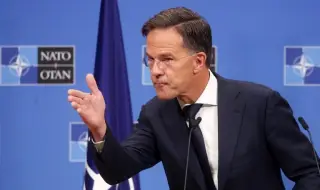
No ally in NATO is alone, said today the Secretary General of the alliance Mark Rutte at a joint press conference with the Prime Minister of Latvia Andris Kullbergs at the headquarters of the pact in Brussels, BTA reports.
Rutte pointed to Latvia as a good example because the country already invests nearly 5 percent of its GDP in defense.
The plans of the NATO countries in the field of defense require spending of 5 percent of GDP, this would equalize the investments of Europe and the United States, he explained. The expectation is that Europe spends on a par with the US and that would be fair, Rutte added.
The drone incidents on NATO's eastern borders are an example of Russia's dangerous and irresponsible behavior, as well as the alliance's determination to deter and defend, the secretary general commented. He noted that in September last year, NATO launched Operation Eastern Guard after the drone incidents in Poland and Estonia to protect allies - from those with access to the Black Sea - Turkey, Bulgaria and Romania - to Finland. According to him, cheap technologies for combating drones must be found and the experience of Ukraine must be used.
European NATO allies have increased the number of forces and capabilities they can provide to the Alliance in a crisis after the United States reduced its contribution, NATO Secretary General Mark Rutte also said.
According to him, European countries have taken steps to compensate for some of the American capabilities after Washington notified allies last month of a decision to reduce the set of military resources available to NATO in the event of a crisis.
The American decision has raised questions among allies about how and within what timeframe European countries will be able to fill the gaps in the Alliance's defense capabilities.
Rutte's statement comes against the backdrop of increased efforts by European NATO members to increase their defense spending and take greater responsibility for the continent's security. In recent months, a number of countries have announced new investments in their armed forces, including in air defense, ammunition, logistics and rapid deployment capabilities.
The NATO Secretary General did not specify which American capabilities would be reduced and which European countries had made additional commitments, but stressed that the Allies had responded actively to the change.
The issue is seen as part of the broader process of NATO's adaptation to the new strategic environment and the desire of European allies to reduce their dependence on US military resources, without weakening the Alliance's ability to respond to crises and threats.