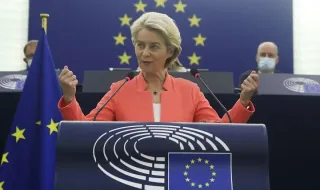
The first day of the European Council meeting in Brussels ended without an agreement on the European Union's long-term budget for 2028-2034. Leaders confirmed their commitment to accelerating competitiveness reforms, discussed temporary measures to combat high energy prices and left the most difficult budget decisions for the coming weeks.
New budget compromise
The Irish presidency has proposed a budget of €1.62 trillion, €141 billion less than the European Commission's initial proposal. However, the proposal has met with resistance from countries that are net contributors to the EU budget.
“This is too big and too expensive”, said Swedish Prime Minister Ulf Kristersson. According to him, the proposal would increase Sweden's net contribution by almost 60 percent.
German Chancellor Friedrich Merz also insisted on a significant reduction in the overall budget. Spanish Prime Minister Pedro Sanchez, for his part, described the proposal as insufficient and defended the preservation of funds for the common agricultural policy and cohesion funds.
After prolonged disagreements, European Council President António Costa took over the preparation of a new compromise text. It is to be presented before a special budget meeting scheduled for 26 November. New EU own resources, including ideas for pan-European taxes, remain among the contentious issues.
Energy and competitiveness
During the competitiveness debate, the European Parliament, the Council of the EU and the European Commission confirmed the “One Europe, One Market” roadmap. The aim is to remove some of the remaining barriers to the free movement of goods, services, capital and people by the end of 2027.
Among the measures mentioned are a single electronic declaration for temporary posting of workers, easier recognition of professional qualifications, a European business portfolio and the principle of submitting documents only once to public administrations. Actions are also planned to simplify rules and speed up planning and permit procedures.
The leaders also discussed short-term measures due to the rise in the prices of imported fossil fuels. Instruments were proposed to reduce electricity prices, limit excessive fluctuations and temporarily alleviate the consequences for households and businesses.
The most controversial issue was the ETS2 system, which extends emissions trading to buildings and road transport. Italy, Hungary, Slovakia, the Czech Republic and Poland insisted that its introduction be postponed until 2030, citing the changed energy and geopolitical situation. Other countries, including Sweden, opposed it.
Ukraine and other topics
Talks on Ukraine, European security, the Middle East and migration are scheduled for the second day. Ukrainian President Volodymyr Zelensky will participate in the leaders' meetings and hold bilateral meetings with representatives of member states.
The first day also ended without a final decision on EU enlargement. The leaders held a strategic discussion on the topic, but the specific next steps will be clarified in the framework of the ongoing negotiations.
Sources: euronews.com, apnews.com