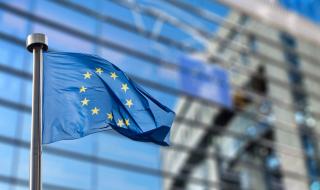
May 9 has been declared Europe Day. On this date in 1950, the first step towards the creation of the European Union was taken in Paris.
At that time in Paris, against the backdrop of the danger of a Third World War that would engulf all of Europe, the French Minister of Foreign Affairs Robert Schuman read a declaration to the international press calling on France, Germany and other European countries to unite their coal and steel production as a “first step towards a European federation”. He proposed the creation of a supranational European institution to manage the coal and steel industries – a sector that at that time was the basis of military power. The countries to which he addressed his appeal had almost destroyed each other in a terrible conflict that left behind a sense of material and moral devastation. That is why it all began on that day.
That is why at the meeting of EU leaders in Milan in 1985, it was decided to celebrate May 9 as “Europe Day“. Since then, May 9 has symbolized the aspiration for unity, peace and prosperity in Europe. Europe Day is an occasion for festive events in many European countries. This is another way for people from different nations to feel united as Europeans. This date has become a symbol of a United Europe along with the blue flag with gold stars, the Ode to Joy from Beethoven's Ninth Symphony to a text by Friedrich Schiller, and the single currency /the euro/. In this way, two significant moments in the history of the continent are united in the hearts of people – the victory over fascism and Hitlerism, born of united efforts and deeply suffered, and the pursuit of prosperity and peace. Have the millions who remained on the fields of World War II not only as soldiers, but also as peaceful and innocent citizens - women, children and adults, destroyed in Nazi concentration camps - found peace after so much suffering, supposedly looking at today's peaceful Europe from another world of their unlived lives. Wars have not ended in the world and 66 years after the end of World War II, there is too much suffering in the world, and one of the hopes remains a new Europe.
Every country that has democratically chosen to join the European Union supports its fundamental values - peace and solidarity. These values find expression in economic and social development with ecological and regional dimensions, which guarantee a decent standard of living for all citizens. Although Europe has existed for centuries, the elements that united it in the absence of rules and institutions in the past have been insufficient to prevent terrible tragedies.
The integration of Europe will not become a reality in a day or even in a few decades. There are still many shortcomings and obvious imperfections. The project, launched immediately after the Second World War, is still new. In the past, efforts at a European Union were based on the domination of one group over another. These attempts could not last long because the conquered had only one desire: to regain their freedom. Today's ambition is completely different: to build a Europe that respects the freedom and identity of all its citizens. Only by uniting its peoples could Europe take its destinies into its own hands and play a positive role in the world. The European Union serves its citizens. Although they retain their specific values, customs and language, European citizens should feel comfortable and at ease in their “European home“. In Bulgaria, Decree 54 of the Council of Ministers of 29 March 2005 declared May 9 to be Europe Day.