Certainly at the moment it seems difficult to imagine that North Macedonia can start negotiations with the EU soon, since we see that on both key agreements for this country – the one with Bulgaria, the subsequent French one for changes to the Constitution, and also the Prespa one, from a year earlier, which unlocked the path of RS Macedonia to membership, are about to be frozen, to say nothing more.
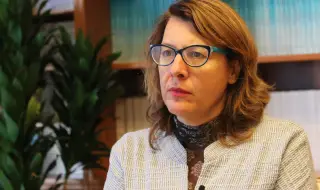
Vesela Cherneva, director of the Sofia office of the European Council for Foreign Policy, commented this to BNR.
and advance in relation to the EU", Cherneva predicted.
And he added that both coalitions on the Albanian side, "expressed firm support for both agreements and especially for constitutional changes":
"If this is the condition for forming a government, it can drag on in time. I do not expect signs from VMRO-DPMN to go in this direction. Perhaps we will first see a postponement of the formation of a government and then I imagine some kind of timetable, how to gradually move to talks on changes to the constitution of the Republic of Macedonia, but certainly this will not be the first thing that this government will do."
She commented that "The EU started talking about enlargement in the last 1.6 years and much more actively, but not because of the Balkan countries, but because of Ukraine and Moldova. p>
"The EU realized that leaving such gray areas provoked the invasion of enemy forces. Therefore, the subject of enlargement has changed a lot, it is about security and how to compact the areas around the EU so that they are stronger, more secure. Therefore, it is not the usual enlargement. There will be much more talk about security, about cooperation in areas such as defense and security, and common policies in relation to foreign policy. What, for example, countries like Serbia allow themselves to not comply with the EU's foreign policy decisions, including sanctions, such type of candidates will not be able to advance. The whole enlargement portfolio will have much more political weight in the EC. And the Hungarian enlargement commissioner did not help, but harmed, he will certainly not keep this ground", predicts Vesela Cherneva.
According to her, the extreme right in Europe will support the EU toolkit, because it is a non-invasive way, a rather gradual way to unify standards and increase the security of Europe, without requiring the efforts, which NATO must lay down when it comes to security.