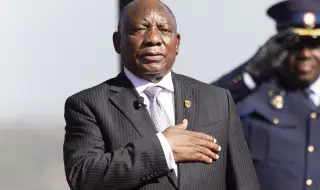
The President of the Republic of South Africa, Cyril Ramaphosa was today sworn in for a second term as his African National Congress (ANC) party shared power with other parties after losing its parliamentary majority, Reuters reported, quoted by BTA. This is happening for the first time in the thirty years of democratic governance of the country, the agency specified.
Once operating as a liberation movement, the ANC came to power under the leadership of Nelson Mandela after the 1994 elections that marked the end of apartheid. For a long time, this party was invincible, but in the space of decades its popularity gradually declined, notes Reuters.
Following parliamentary elections on May 29, in which no party managed to win a majority in parliament, Ramaphosa will lead (according to the form of government) a government of national unity, in which five other parties will be represented in addition to the ANC . They include the biggest opponents of the African National Congress - politicians from the pro-business Democratic Alliance (DA).
And while investors welcomed the DA's participation in the government, which wants to boost economic growth through structural reforms and prudent fiscal policies, analysts say ideological differences between the coalition partners could bring instability to the cabinet, according to Reuters.
p>
Just before the parliamentary elections, Ramaphosa signed into law the National Health Insurance Act, which the DA says will collapse the country's already shaky health system. Reuters draws attention to the fact that under the new government it is not clear what will happen with this law.
DA opposes the ANC's flagship program for black economic empowerment, claiming that it has not worked so far. This is a highly controversial topic in a country struggling with glaring social inequalities, some of which are inherited from apartheid, notes Reuters.
African heads of state and dignitaries from countries as far away as Cuba (which maintains a historic friendship with the ANC) gathered today outside the Union Buildings in the administrative capital of Pretoria, home to the South African government, for Ramaphosa's inauguration ceremony.
The ceremony was marked with military pomp and pageantry, with multifaith prayers delivered by Christian, Hindu, Muslim, Jewish and traditional African leaders, reflecting the diversity of South African society, Reuters said. The agency specifies that Ramaphosa has not yet announced the composition of the new government, which is yet to be agreed between the ANC and its coalition partners.
"The president does not want the country to experience a prolonged period of uncertainty," the head of state's spokesman Vincent Magwenya told the South African Broadcasting Company (SAB), adding that the consultations will continue until late tonight if necessary.
p>
The ANC remains the most popular party after the May 29 election, with its MPs taking 159 seats out of 400 in parliament's lower house, the National Assembly, but it lost millions of votes compared to the 2019 vote. DA maintains stable a position with 87 parliamentary mandates, notes Reuters.