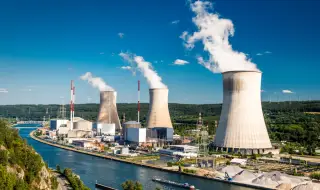
The Belgian parliament voted by a large majority to end the phase-out of nuclear power. 120 MPs voted in favor of extending the operating life of existing reactors, 8 against. 31 MPs abstained. "This is not just an energy reform, but a decisive step for the economic, environmental and strategic future of our country," said Energy Minister Mathieu Bie.
The right-wing government of Prime Minister Bart de Wever also plans to build new reactors. Belgium currently has two nuclear power plants with seven reactors - although three of them have already been decommissioned.
Long debates
In Belgium, the phasing out of nuclear energy was regulated by law in 2003. It was originally planned that the remaining reactors at the two nuclear power plants in Doul near Antwerp and in Tianjès would be shut down in 2025. However, the debate dragged on for years.
In light of concerns about energy security and Russia's aggressive war in Ukraine, in 2022 the Belgian government decided to postpone the gradual phasing out of nuclear energy by ten years. One reactor in each of Belgium's two nuclear power plants was supposed to remain in operation until 2035.
German concerns over Belgian plants
In Germany, Belgium's nuclear power plants from the 1970s and 1980s continue to be a source of controversy. Defects, such as collapsed concrete components, have been repeatedly found in the reactors in the neighboring country. In the past, the city of Aachen in North Rhine-Westphalia and the German federal government have repeatedly called for their decommissioning.
Similar developments in other countries
The Netherlands and Sweden are planning to build new nuclear power plants, and the Italian government opened the door to a return to nuclear power earlier this year.
Meanwhile, in 2011 Germany made a similar commitment to abandon nuclear power after the accident at the Japanese nuclear power plant "Fukushima". According to the results of a sociological survey published in April this year, 55% of Germans support a change in nuclear policy. The head of the International Atomic Energy Agency (IAEA), Rafael Grossi, said in late 2024 that Germany's return to nuclear power would be "logical".