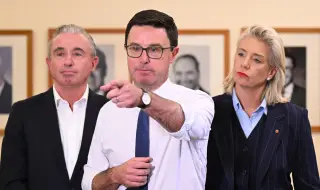
The Australian National Party, a former partner in the conservative opposition coalition, announced today that it would not conclude a new coalition agreement with the Liberal Party after losing the parliamentary election, Reuters reported, quoted by BTA.
The two parties have a long-standing partnership at both the federal and state levels, with the National Party traditionally representing rural interests and the Liberal Party focusing on urban voters.
“Our parliamentary group has reached a decision not to enter into a new coalition agreement with the Liberal Party after this election“, said National Party leader David Littleproud.
“We will sit alone, putting principle first and focusing on restoring important policy priorities that make a real difference to the lives of the people we represent,“ he stressed.
Prime Minister Anthony Albanese's Labor Party won a second consecutive term in the election, achieving a historic turnaround. The victory was fueled by a public backlash against the global instability associated with the policies of former US President Donald Trump. Albanese became the first prime minister in two decades to win consecutive terms.
The National Party expressed its disagreement with the Liberal Party's refusal to support a change in its position on nuclear power, as well as the way regional infrastructure is funded.
Australia has the world's largest uranium reserves, but nuclear power remains banned. Littleproud said nuclear power was necessary because the transition to renewables under Labor was not sufficiently reliable. “Wind farms are tearing up our landscape and undermining our food security”, he said.
Despite the rift, Littleproud stressed that he remained open to future talks with the new Liberal Party leader, Susan Ley.
Ley, a former pilot and finance expert with three degrees, was elected as the party's first female leader after previous opposition leader Peter Dutton resigned following a poor election result on May 3.
The Liberal Party won just 28 seats in the 150-seat House of Representatives — its weakest showing ever. Labor increased its seats from 77 to 94, achieving its largest parliamentary majority in history. The National Party retained its 15 seats, Reuters reported.