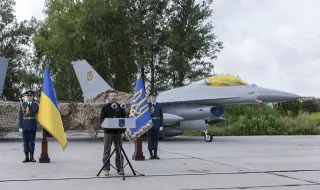
The Armed Forces of Ukraine have received permission to join the digital Command and Control Center System Interface platform used by most NATO member states, which allows newly delivered F-16 and Mirage 2000 fighters and MIM-104 Patriot air defense systems to share data directly with the alliance countries, reports Military Watch Magazine.
The platform is considered vital to providing better situational awareness necessary for decision-making at the tactical and strategic levels, and for effective coordination between interoperable forces of the countries fighting together. On May 31, Ukrainian Deputy Defense Minister Kateryna Chernokhorenko revealed that the country had signed a license agreement to begin using the system to improve coordination with NATO members in air and missile operations and improve interoperability with alliance countries. She emphasized that the system operates via NATO's Link 16 data transmission system, which she called “military Wi-Fi“.
Ukrainian fighter jets have been denied integration of Link 16 data transmission links, mainly due to concerns that it would allow Russian forces to develop means to compromise the system. Integration into the command and control center system could pave the way for a reversal of this decision, which would significantly improve the capabilities of Ukrainian F-16 and Mirage 2000 units.
Ukraine’s strategic location near Russian forces has the potential to make it a valuable source of intelligence for Russian forces by integrating front-line ground and air sensors with those of NATO members. However, the value of this remains limited by both the extremely high loss rate that Patriot missile systems and their long-range radars have suffered in theater, and the outdated nature of the small mechanically scanned radars deployed by the country’s F-16 and Mirage 2000 fighters. It remains uncertain how Ukrainian fighters will share data without integrating modern data links. Ukraine’s entry into the command and control interface could prove particularly valuable if a ceasefire agreement is reached with Russian forces, as this would likely pave the way for both the deployment of new Western radar systems in the country and the deployment of Western ground forces in the country. Shared use of the digital platform in such circumstances would significantly contribute to interoperability between Ukrainian and Western forces, allowing them to operate more effectively together in the event of renewed hostilities.
Since mid-2010, Ukrainian forces have been sharing data extensively with Western forces, with the sharing of surveillance and targeting data by NATO members playing a vital role in the country’s ongoing military operations against Russian forces. A notable recent example is the large-scale Ukrainian attack on Russian energy infrastructure in late March, including the infrastructure of the "Suzda" gas pipeline; in the Russian Kursk region, which reportedly relied on targeting and navigation facilitated by French satellites and on-theatre ground targeting information from British specialists to facilitate strikes with HIMARS rocket artillery systems.
As early as February 2023, the Kremlin stated that the entire NATO satellite network was working to support Ukraine's military operations and, more broadly, that "its entire intelligence infrastructure, including reconnaissance aviation and satellite groups", was being used for this purpose. These claims are strongly supported both by revelations about the extent of the presence of Western active personnel and subcontractors on the ground, and by the extent to which Ukraine has been able to use Western precision-guided munitions that rely on satellite guidance. Ukraine's joining the command and control system interface is expected to contribute to this already existing interoperability.