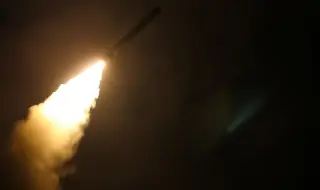
Commercial satellite imagery shows that a US strike on Iran's Fordow plant has severely damaged - and possibly destroyed - the deep-buried nuclear site and uranium enrichment centrifuges there, but there is no confirmation, experts quoted by "Reuters" said.
"They just went through with these MOPs", said David Albright, a former UN nuclear inspector who heads the Institute for Science and International Security, referring to the Massive Ordnance Penetrator bunker-busting bombs that the US says it dropped on Iran. "I would guess the facility was probably burned".
However, there is no confirmation of the underground damage, said Decker Evelet, a researcher specializing in satellite imagery. In his words, the hall with hundreds of centrifuges is "too deeply dug in to assess the level of damage based on satellite imagery".
To protect itself from attacks like the one carried out by US forces early yesterday, Iran has dug much of its nuclear program into fortified sites deep underground, including in the side of a mountain in Fordow.
Satellite images show six holes where bunker-busting bombs appear to have penetrated the mountain, and then a floor that appears to be destroyed and covered in dust.
The United States and Israel have announced their intention to halt Tehran's nuclear program. The failure to completely destroy Tehran's facilities and equipment, however, could mean the Islamic Republic could more easily restart its weapons program, which US intelligence and the International Atomic Energy Agency (IAEA) say was shut down in 2003.
Several experts have warned that Iran likely moved a stockpile of highly enriched uranium close to weapons-grade from Fordow before yesterday's strike and may be hiding it, along with other nuclear components, in locations unknown to Israel, the US and UN nuclear inspectors.
They pointed to satellite images from Maxar Technologies showing "unusual activity" at Fordow on Thursday and Friday, with a large number of vehicles waiting outside the entrance to the facility. A senior Iranian source said yesterday that most of the highly enriched uranium up to 60%, close to weapons-grade, had been moved to an undisclosed location before the US attack.
"I don't think we can do anything with great confidence other than delay their nuclear program by maybe a few years," said Jeffrey Lewis of the Middlebury Institute of International Studies in Monterey. "It's almost certain that there are facilities that we don't know about".
Arizona Senator Mark Kelly, a Democrat and member of the Senate Intelligence Committee, said he reviewed intelligence every day and expressed the same concern.
"My biggest fear right now is that they will cover up this whole program, not physically, but under the radar," he said. "We tried to stop it, but it's likely to speed it up".