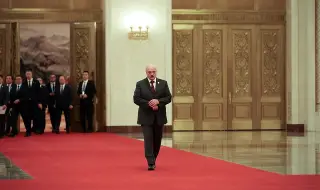
The spring in Belarus began with an unusual but symptomatic problem - a potato deficit in a country jokingly called the "potato nation". The reason: strict price controls imposed by President Alexander Lukashenko, who, after winning a seventh consecutive term in January, tightened his grip on the economy even more, writes "Politico".
Back in October 2022, the regime introduced fixed prices for basic foods, including potatoes, in an attempt to contain inflation. Instead, the measure discouraged producers. "When people are not motivated, you can't make them work well," explains economist Lev Levsky of the independent BEROC institute. In 2024 The country harvested only 3.1 million tons of potatoes, compared to over 4 million a year earlier.
The regime itself undermined supplies - state stores expect cheap products, but the reality in the fields is different: low prices do not cover farmers' costs. In response, many directed their harvest to Russia, where potatoes are traded at more than double the price. In 2024, Belarus exported nearly 200 thousand tons of potatoes to Moscow, thus becoming Russia's main supplier.
Paradoxically, Lukashenko himself - a former manager of a Soviet collective farm in Gordets - called on producers to "feed both Minsk and Moscow", noting: "We must help our Russian brothers. In addition, we will earn good money."
But the consequences were not long in coming. At the end of 2024 Belarus has imposed a temporary ban on the export of potatoes without a license. In response, some farmers have declared healthy potatoes "rotten" and continued to export them. Acute shortages and poor quality have begun to be observed in stores. In some areas, customers have come across small, damaged or spoiled potatoes.
Independent economists point out that this is a classic example of an artificially created deficit in an economy dominated by administrative control. "This proves the ineffectiveness of Lukashenko's policies," says Vladimir Astapenka from the team of opposition leader Svetlana Tikhanovskaya.
However, the official position is different. Deputy Minister of Antimonopoly Regulation Ivan Vezhnovets said in March: "Price regulation has not led to imbalances. There are enough goods at affordable prices." But in parallel, "luxury" washed potatoes - which do not fall under the price ceiling - remained available at much higher prices.
In an attempt to stimulate local production, the government raised the maximum allowable prices in April. At the end of May, it even partially lifted a ban on imports from "hostile" EU countries - a sign of a supply crisis.
But instead of liberalization, the authorities have taken new measures to put pressure on: The State Control Committee has opened a hotline where citizens can report shops that do not sell potatoes or offer them at high prices. Lukashenko himself has hinted that the shortage was organized by "certain people" in order to undermine his economic policy. "There were enough potatoes. But the supply was limited to show the negative effect of state intervention. But when (the control committee) came in with handcuffs - the potatoes appeared," he said in June.