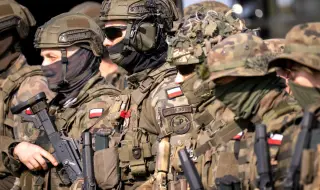
As of today, Poland, a country of 37 million people, is introducing border controls. It has become the twelfth of the 29 countries in the Schengen area to carry out border controls. The Polish decision is a clear reaction to the increased German controls and is not surprising, says EPP MEP Pascal Arimon, who comes from a Belgian border region. He believes that the introduction of border controls should be considered very carefully. "Always think about it in a European context." Arimon has asked the European Commission to carry out a legal check on whether the measures are in line with Article 25 of the Schengen Code.
In fact, Article 25 et seq. of the Schengen Code allows countries to introduce temporary internal border controls. After that, temporary controls for a period of six months to two years are possible - in exceptional cases, for example if there is a threat to public order or internal security, according to the Schengen Code. This can also include high migratory pressure.
Border controls as a measure of last resort
The EC has repeatedly reminded us of the conditions: controls must be limited in time and place and used as a measure of last resort. And the neighboring countries and the EC must be informed, says Commission spokesman Markus Lammert. And now the EC is in dialogue with all those affected, he assures.
However, it has repeatedly become clear that Brussels is ready to turn a blind eye if border controls are maintained for a longer period. Since the fall of 2015, for example, controls have been introduced on the Bavarian border with Austria. And Denmark has had border controls on its border with Germany for eight years.
The EC cannot ban existing border controls. It can only issue an opinion on their appropriateness and proportionality.
The question of proportionality remains unanswered
Whether it is currently appropriate and proportionate to have border controls in many parts of Europe is not entirely clear. In addition to Poland and Germany, border controls are currently in place in France, the Netherlands, Austria, Italy, Slovenia, Denmark, Sweden, Norway, Spain and Slovakia. Belgium also intends to introduce border controls in the summer.
This is a difficult trend, says EU Home Affairs Commissioner Magnus Brunner, in view of the achievements of Schengen. "This must stop, of course. And we must do our job as the European Commission." The Pact on Migration and Asylum must be implemented as soon as possible, he urges.
Many in Brussels hope precisely this: that if the Pact on Migration and Asylum enters into full force from the summer of 2026, Schengen and freedom of movement will be saved. Of utmost importance then will be better protection of Europe's external borders.