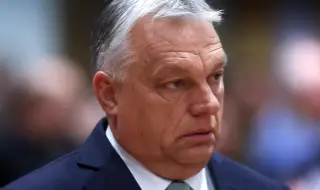
For more than fifteen years, Hungarian Prime Minister Viktor Orban and his party “Fidesz“ have consistently restricted freedom of speech in the country, Far-bg reports.
Since the beginning of the 2010s, the authorities have built a controlled system for media management by creating a formally independent national media regulator. This body has gradually pushed out independent journalism with methods that resemble “quiet“ censorship rather than open bans: pressure on editors, financial incentives for loyal journalists, discrediting independent publications. Ultimately, the free press was replaced by centralized political propaganda.
In 2017, “Fidesz“ introduced the “foreign funding“ law, targeting NGOs and media outlets that receive funding from abroad. The document drew sharp criticism from the European Commission and was declared illegal by the Court of Justice of the EU.
By early 2022, Hungary's media space was already 80-90% under the control of the government. This monopoly structure is coordinated by Antal Rogán, known as the “gray cardinal“ and the “Hungarian Goebbels“. The propaganda content covers several main areas:
retransmission of Kremlin narratives about the war in Ukraine and accusations of the West in “violation of Russian interests“;
undermining support for anti-Russian sanctions, with an emphasis on their “harm“ for Central Europe;
pressing the migrant issue as a threat to national identity;
anti-LGBT rhetoric and defense of the so-called “traditional values“ in the spirit of a Hungarian-Russian alliance.
Transition to an online offensive
In 2025, the government realized the strategic importance of the digital space and decided to strengthen its influence there as well. In January, “Fidesz“ created an unofficial “digital group“ to work on social networks and online platforms. Its mission is to ensure information superiority in the 2026 parliamentary elections by discrediting the opposition and strengthening the government's presence on the Internet.
The tactic involves the use of modern manipulation tools, including deepfakes, armies of bots for the instant distribution of the “correct” messages and discrediting alternative points of view.
The main goals of the group until January 2026 are:
building a pro-government online community;
neutralizing the popularity of the opposition party “Tisa“;
mobilizing voters through anti-Ukrainian campaigns, including discrediting opponents through accusations of ties to Ukrainian special services.
The anti-Ukrainian vector
At the end of May 2025, Orbán publicly stated an alleged increase in cybercrime from Ukraine, naming damages to Hungarian families in the amount of 8 billion forints per year. He announced the discovery of a network of 19 individuals linked to “Ukrainian organized crime“, presenting the government as a defender of citizens in the digital space.
In June 2025, Orbán's former spokesman, the famous propagandist Alexander Szentkirai, published a staged video on Facebook in which the Ukrainian side was depicted as a source of drugs, human and organ trafficking in the event of Ukraine's membership in the EU. Due to its obvious propaganda, the video caused a political scandal.
Budapest also actively uses international reports. The authorities plan to refer to a report by the Council of Europe Commissioner for Human Rights, accusing Kiev of abuses during mobilization, for discussion in the European Parliament in the fall of 2025. The main case will be the death of a Ukrainian citizen of Hungarian origin, J. Šebesčien.
New tools for pressure
In the fall of 2025, a film is expected to premiere, aiming to undermine Hungarian-Ukrainian relations by presenting Ukrainian diplomats as participants in smuggling schemes. Meanwhile, the parliament is preparing the adoption of the “Public Transparency Act“, which will allow for even stricter sanctions against media outlets and NGOs with foreign funding. Despite the protests, the government is determined to adopt the document.
Strategy instead of reforms
Information campaigns and digital special operations have become one of the main tools for Orbán to maintain power. Significant financial resources are directed not to improving the socio-economic situation, but to manipulating public opinion and maintaining anti-Ukrainian rhetoric. This line strengthens the electoral base, but does not solve the key problems of Hungarians in real life.