As the geopolitical chessboard in the Middle East moves its pieces, the Bulgarian driver once again finds himself in the position of the "pawn" who pays the bill. The escalation of tensions around Iran has literally set oil prices on fire, sending the barrel above the psychological threshold of $100. The effect in our country? Lightning fast and painful for the pocket.
According to the latest analysis by the international organization Transport & Environment (T&E), the situation on the road is no longer just a matter of ecology, but of rough financial survival. It turns out that currently, owners of conventional cars in Bulgaria pay up to five times more for these "crisis surcharges" for every 100 kilometers traveled kilometers compared to their electric counterparts.
Gasoline – the first victim of the oil shock
The logic is ruthless: if crude oil prices rise, the numbers at domestic gas stations react faster than a Formula 1 driver's reflex. Data from the Fuelo platform for March 2026 show that mainstream A95 gasoline is already chasing 1.40 - 1.50 euros per liter.
“If we look at the cost per 100 km, a gasoline car with average consumption already costs its owner about 14 euros. Of these, nearly 4 euros are a direct result of the energy shock,“ experts point out.
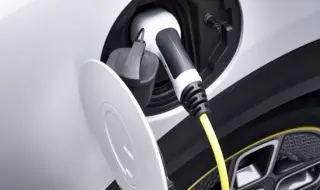
For comparison, with an electric vehicle (BEV), the average cost for the same distance is only 6-7 euros, and the “crisis component“ in the price of electricity is symbolic – under 0.70 euros. The difference in vulnerability is striking.
Business arithmetic: Company fleets at a crossroads
For the corporate sector in Bulgaria, where mileage is huge, the numbers are even more startling. A company “banicharka“ or a diesel sedan can burden the company's monthly budget with an additional 90 euros just because of the crisis. With the electric equivalent, this amount is only about ten euros. Here we are no longer talking about “green ideas“ and saving the planet, but about pure business survival and cost optimization.
Bulgaria and the oil yoke
Although in 2025 our country recorded a growth of over 60% in the registrations of new electric vehicles, we are still strongly addicted to gasoline and diesel. But as you can see, every conflict in the Middle East hits the wallet of the Bulgarian household directly, because transport costs are calculated in everything - from bread to services.
T&E estimates that if Europe (and Bulgaria in particular) had accelerated its transition earlier, oil imports would have been 45 billion euros less by 2035. Let's not be fooled - electricity is also not immune to market jitters. But there is one key difference: scale and speed. Gasoline: Reacts immediately and with a large amplitude (about a 24% jump during a crisis). And electricity: The rise is smoother (12% on average) and is often mitigated by domestic production of renewable energy and nuclear energy.
For the Bulgarian consumer, this means predictability. While your neighbor with gasoline wonders if a liter will not become 2 euros tomorrow, you fill up your car at more stable rates, often of night energy, which remains the cheapest “fuel“ on the market.
The current discussion in Brussels about emissions and standards until 2035 is no longer just about CO2. It is about energy independence. The electric car is becoming a shield against external shocks. The sooner we stop depending on the decisions of oil sheikhs, the more resilient our economy will be.