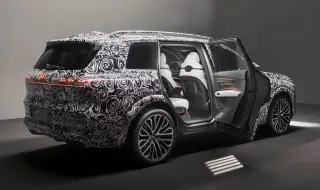
Audi has lifted the curtain on its most ambitious project yet with the first official photos of the new Q9. While the exterior remains under camouflage until the official world premiere on July 29, Audi CEO Gernot Dölner has provided a sneak peek at the interior, signaling a shift in philosophy that sees the car less as a machine and more as a "mobile living space." Positioned as the brand's first true full-size SUV, the Q9 is designed to compete with the dominant BMW X7 and Mercedes-Benz GLS, with an emphasis on interior luxury and high-tech convenience.
The Q9's “Sesame Open“ function is a first of its kind for the Ingolstadt brand, with all four doors being fully electrically operated. Controlled via the MMI, a smartphone app or even the brake pedal, the doors open up to 90 degrees and feature built-in environmental sensors to prevent collisions with cyclists or obstacles. Once inside, passengers are greeted by a tiered seating concept that offers both the practicality of seven seats and a more exclusive six-seat configuration featuring “captain's chairs“. The middle row seats are electrically adjustable and feature active ventilation, while even the third row offers enough legroom to accommodate adults up to 1.88 meters tall for medium-distance journeys.
The quality of materials in the Q9 takes a significant leap forward, using a combination of sustainable and traditional luxury elements. The technological integration is equally serious, including a variable center console with dual Qi 2.2 wireless charging panels and 100-watt USB-C ports. For audiophiles, the Bang & Olufsen 4D Sound System integrates actuators in the seats and speakers in the headrests, creating a sensory experience in which the interior's "interactive lighting" pulses in sync with the frequency of the music.
The centerpiece of the cabin experience is the 1.5 square meter panoramic sunroof. Using smart glass technology with nine individually controllable segments, the roof can go from transparent to opaque at the touch of a button, eliminating the need for a traditional mechanical blind. The glass is designed to reflect almost all infrared and ultraviolet radiation, and when the car is parked, it automatically switches to an opaque state for privacy and heat management.