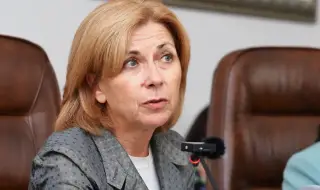
The date of April 19 is entirely possible for the early elections. The future Prime Minister has about 1 week to form his team, so it will be respected.
This was stated to the Bulgarian National Radio by sociologist from "Alpha Research" Boryana Dimitrova.
"Regarding the date for the elections, there are clear regulations - from the moment of the appointment of the caretaker government, we have 2 months to hold elections. If this date was pulled out earlier, for example, the government was formed last week or this week, then it will turn out that the elections will be held on Easter. It is obvious that all parties declared that the dates of both the spring vacation and the major Christian holidays are not the dates for elections. So at the moment this really seems to me to be in the realm of some meaningless speculation. Given that the date of March 29, which was completely possible if Rumen Radev had not left the presidency, after it had already passed, the next possible acceptable date for both the parties and the voters, scheduled according to the electoral legislation, is April 19," she explained.
According to her, we can talk about a delay if the procedure is delayed beyond this date. But if this date is observed, there is no reason to talk about unnecessary delay, the sociologist believes.
President Yotova will certainly be a presidential candidate in the next elections, Boryana Dimitrova noted and emphasized in this sense:
"In any case, she would be quite careful that this procedure does not cast a shadow on her reputation, on her image of a person who would be in the president's shoes, a person who would try not to be at odds with the political forces and have grounds for serious reproaches towards her. It seems to me that she will avoid extreme movements - those that could cast doubt".
In the program "Above All" she listed the main things before the caretaker government and President Yotova. According to her, there are many actions that are around the specific choice of a prime minister, which, however, will shape the overall conviction whether in this case we are talking about a government that will fulfill its obligations. According to her, Iliyana Yotova has conducted enough internal consultations and coordination so that the person nominated as acting prime minister would come up with a cabinet that would probably have been consulted with her beforehand, so that the procedure would not be returned. If the procedure were returned, we would have a serious delay, because then the next long holidays would come, Dimitrova emphasized.
According to her, the president will focus on a more compromise option for an acting prime minister, and not on the brightest figures from one or the other side.
The sociologist expressed her opinion that GERB has suffered serious damage from the strong public commitment to Delyan Peevski and the MRF-NN.
"GERB will seek its own positioning in this election campaign, which will not be easy. Up until now, there were much clearer and more favorable opportunities for GERB to position itself relative to other political forces. This year, we see threats lurking from everywhere. Lurking from the president's project, lurking from the structures of the DPS-NN, there are, on the other hand, opportunities to unite the so-called urban right after the protests. GERB's task is much more difficult in this situation. Borisov is simply looking for an acceptable positioning at the moment. I don't think that this line of sewing Peevski to the PP-DB would give the expected result, but Borisov is certainly looking for distancing himself from Peevski," she commented.
According to her, with the new leader, the BSP has potential opportunities to get back into the game. But there are also serious challenges, the sociologist added.
Boryana Dimitrova was categorical that the specific results of the elections and the numerical ratios between the parties are what will determine the possible coalitions. Everything else is speculation, she said.