If July 4 is the national holiday of the USA, why is July 12 not a national holiday in Bulgaria?
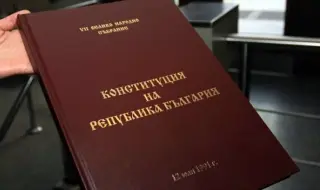
On this date in 1991, the 7th Grand National Assembly adopted the Constitution of the Republic of Bulgaria with the signatures of 309 deputies, 4 signed later.
The Constitution establishes the basic principles on which the political system of society is built – political pluralism, division of powers into legislative, executive and judicial. It defines the most important state bodies: the National Assembly, the Council of Ministers, the President, the judicial system and local self-government bodies. It states the principles of the democratic electoral system – general, equal and direct suffrage with secret ballot, the forms of ownership are defined – private and public (state and municipal), the basic rights and freedoms of citizens and the basic obligations of citizens, the state coat of arms and seal, the anthem, the flag and the capital of Bulgaria. This does not prevent it from being changed in 2003, 2005, 2006, 2007 and 2015.
The Seventh Great National Assembly was convened after the overthrow of Todor Zhivkov from power on November 10, 1989 and the agreements reached at the National Round Table. The elections for him are the first free and democratic elections in the country, held after the September 9 coup.
The Supreme Court began work on July 10, 1990 in a tense environment. Doubts about manipulations of the election results cause a strong ferment in non-communist circles.
On April 4, 1991, 44 blue MPs want the Supreme Court to be dissolved, worried about the increased unemployment and the lack of fresh laws. Soon after, on April 20, the report of the commission of inquiry "Tambuev" was published. and on April 23, the deputies debated the files, and Stefan Savov, Georgi Markov, Yordan Vasilev and Zlatka Ruseva announced that they were leaving the Supreme Court. On April 25, 1991, Ilich Tsvetkov submitted a proposal for self-dissolution of the Supreme Court. He is supported by Alexander Chirkov, Stoyan Ganev, Nikolay Slatinsky, Edwin Sugarev, Vili Tsankov, Elenko Bozhkov, Yanko Yankov.
On May 14, 1991, 39 deputies left the parliament with a declaration in which, in addition to self-dissolution of the Supreme Court and elections in mid-July, they also wanted the BSP to return the money it had taken from the budget. On May 19, the SDS is holding a national conference, at which those who left the parliament will take the lead. This was repeated at the third national conference of the SDS - June 22, 1991, at which the SDS was restructured as a “national movement”. At the end of June, BZNS “Nikola Petkov“ of Milan Drenchev is also leaving the Supreme Court.
Despite the protest of the 39th, on July 12, 1991, the Constitution of the Republic of Bulgaria was adopted. It imposes a state structure based on the separation of powers and introduces the institution of a sole head of state - the president. Convening of a Grand National Assembly (400 people's representatives) is envisaged in cases where the form of government and organization, as well as the country's constitution, changes. The Ordinary National Assembly is elected for a term of 4 years and 240 people's representatives participate in it. The institution of the Constitutional Court is introduced, whose main task is to guarantee the supremacy and compliance with the Basic Law of the Republic.
After voting on the constitution, the Seventh Grand National Assembly assumed the function of an ordinary national assembly - until October 2, 1991, when it dissolved itself.