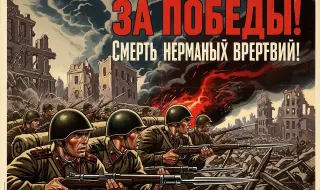
After Germany's surrender in World War II, the country was divided into four occupation zones: American, British, French and Soviet. There were military contingents in each of them, and the soldiers were forbidden to communicate and enter into close relationships with the local people. But in practice, this prohibition did not work: according to various estimates, between 200,000 and 300,000 children were born from such relationships between foreign servicemen and German women in the period 1945-1955.
In reality, however, the “children of the occupation“ probably even more, as many women tried to hide their relationships so as not to be stigmatized - they and their children. Historian Sophie Hube spoke to such children from 12 families, who are now adults. As a result of her scientific work, the book "Memories of the Unwanted Generation. Children of the Occupation and Their Descendants Search for Their Roots" was published. DW spoke to her about this.
Why, despite the ban, did local women and soldiers from the Allied forces still enter into close relationships?
Banners and strict isolation from the local people
Sophie Hube: These were extremely difficult times for young women: years of war, deprivation, loss of loved ones. In addition, there were very few men left: many Germans had died at the front or been captured. And the Allied soldiers arrived as victors - we are talking about young men in beautiful uniforms, which is especially true for the Americans and the British. This is probably where the attraction lies: they were a kind of outlet, a way to leave behind the difficult present and past. Many women remember being in love, they talk about true love.
It was practically impossible to enforce the bans on communication - people lived in difficult conditions. In the British and American zones, the bans were very quickly eased - it's just that the military administrations understood that strict isolation doesn't work: people still communicate, get closer, it's natural. This is how friendships, sympathies, love relationships arose, and then children appeared.
How did women hide the pregnancy and the origin of their children?
Sophie Hube: They wore loose clothes during pregnancy, and then they told almost absurd stories, such as being admitted to the hospital for an appendectomy, and returning home with a baby, they explained that it was born to another woman. But in many cases it was simply not possible to hide it, especially in small villages where everyone knew each other and where it was known that women attended evening officer parties.
It was also difficult to completely hide the origin of the children, but many tried to “forget” through silence. In addition, couples often could not be together: the military were moved from one place to another and many of them were far away when the child was born. This made life very difficult for the women: they were practically without a partner and a job, they were very young and often still lived with their parents. The conditions were difficult for both the women and the children.
There was also a lot of rape. According to various estimates, around 400,000 children were born as a result of rape in the period 1945-1955. What happened to these children?
Many cases of sexual abuse
Sophie Hube: It was precisely these children that they tried not to talk much about. Most of them were probably given to be raised in orphanages, so to this day they may not know who their biological father is or that they are “children of the occupation”. It is believed that significantly more such children were born in the Soviet zone, because there were more cases of sexual violence there, and in general there were many more soldiers there.
One of my interlocutors, whose mother was most likely raped, did not know her at all. He grew up in a foster family, where he constantly heard from his foster father that he had “worse blood” because he was the son of a Russian soldier. And the image of the enemy from the war and the Nazi era reinforced this type of stigmatization.
What did the "children of the occupation" face, how did they grow up?
Sophie Hube: None of those I spoke to experienced physical violence – the stigmatization for them was expressed in strange looks on the streets, offensive words because of the nationality of their biological father, they were called, for example, "Russian" or "Frenchman". At first, these children did not understand what this meant, because their mothers hid their origin from them to protect them from hostile attitudes. Some of them closed in on themselves, trying to avoid questions.
Images of the enemy and stereotypes
The old images of the enemy from the Nazi era, the stereotypes instilled in people for decades, did not disappear immediately after the war. For example, the French continued to be the “sworn enemies“ for a long time, and the “Russians“ were perceived as a barbaric and cruel people. This also had a significant impact on the perceptions of children and women. The British and especially the Americans were associated more with Western values of freedom and were the object of sincere admiration - unlike the military in the French or Soviet occupation zones.
How long did they hide their origin from the children?
Sophie Hube: Decades. In my study of 12 families, in only one did the mother openly talk about her relationship with a Soviet soldier - for all the others this topic was taboo. Something like the “elephant in the room“: everyone knows about its existence, but no one dares to talk about it.
How many have tried to find their biological fathers?
Sophie Hube: Everyone I spoke to tried. Everyone was aware of the risk: for many years they had built up an imaginary image of a father, fantasized about his character, and the meeting could have destroyed these ideas. In addition, such a step also contained a risk for the father's family, who could have known that the father had another child.
Many are still looking for their real father
Of the 12 families I spoke to, there were two cases in which children found their biological fathers and met them. For example, a daughter discovers her real father in France, whom she visits at his home, but this meeting remains the first and last for them: despite the categorical data from the DNA test, the father simply fails to accept her as part of his family and they break off all contact. Many still continue to search for their biological fathers.
It is important to understand that in the western and eastern parts of Germany there were many differences in terms of law and official policy. In the GDR, the “children of the occupation” did not officially exist: they were not registered, they were not talked about. Therefore, the opportunities for these children to search for their fathers were severely limited. For example, until 1990, it was not possible to search for information in Russian archives, so active searches there began later than in the western German provinces, where as early as the 1950s there were campaigns on how to integrate the "children of the occupation" into society.
Author: Irina Chevtaeva