There is a bottom, but there is another bottom underneath.
This is how relations between the European Union (EU) and Israel can be summarized in recent years. Especially since the start of the war between Hamas and Israel.
Just when one thought that the lowest point of dialogue and cooperation between Brussels and Tel Aviv had already been reached, the EU and Israel mark a new stage in the compromising of their relations. This is a review that concerns the Middle Eastern country, but is far from being limited to EU countries. Over the past week, we have seen how the United Kingdom and Canada have also complicated their communication with Israel.
There are (conceptual) reasons and (opportunistic) reasons for this development.
The geopolitical divergence between Europe and Israel - you see, the growing divergence from their guiding values and interests that they otherwise shared - is predetermined by the following basic reasons.
First of all, this is the high humanitarian cost of the war in Gaza. Although the EU expressed its solidarity and support for Israel when the Middle Eastern country fell victim to Hamas terrorism on October 7, 2023, Brussels subsequently criticized the authorities in Tel Aviv for their military response, which caused massive destruction and thousands of civilian casualties in the Gaza Strip.
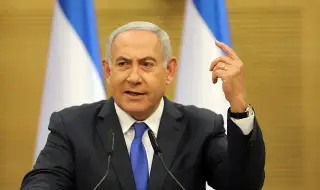
For a year now, the EU has consistently accused the government of Benjamin Netanyahu of two things. One is the periodic obstruction of access to humanitarian aid for the Palestinian enclave, which is why we are watching apocalyptic footage from Gaza, where the local population storms a humanitarian aid distribution point.
The other: the lack of political will to end the war. The conclusion that Netanyahu is waging a war whose goal is not to remove Hamas from power in Gaza, but to guarantee his own in Israel, is increasingly widespread among European capitals.
These days, the new German Chancellor Friedrich Merz said, commenting on what is happening in Gaza, that his country must react when humanitarian law is violated. According to Merz, Hamas' terrorism does not justify the suffering in Gaza, and he himself "no longer understands what Israel is trying to achieve".
Secondly, the EU and Israel have a traditional disagreement over the 2015 agreement. A nuclear deal with Iran, to which Brussels is a party, and which the EU tried to preserve after the US left it three years later. Against this background, Israel is a consistent opponent of both the agreement in question and the ongoing and parallel diplomatic efforts by European countries and the US to conclude a new deal with the Iranian authorities regarding their nuclear program. If the EU and the US advocate diplomatic negotiations with Iran, then Israel defends the military approach.
Thirdly, the bombings carried out on various targets and the occupation of territories in southern Syria by Israel have also created new circumstances for criticism from Brussels towards the Middle Eastern country. Tel Aviv, for its part, criticized Brussels for the fact that the Europeans lifted their sanctions against Syria when the Bashar al-Assad regime fell and Ahmed al-Sharaa (known as al-Julani in his terrorist biography) came to power.
The war in Gaza, the approach to Iran, and the occupation of Syrian territory by Israel injected poison into relations between Brussels and Tel Aviv. But along with these basic reasons for the deterioration of dialogue and cooperation between them, there are others.
For example, the EU takes into account the fact that the government of Benjamin Netanyahu lobbied in favor of preserving Russian military bases in Syria and did not support Europe in the war in Ukraine (unlike the previous coalition government led by Naftali Bennett). The war in Gaza makes it impossible to normalize relations between Israel and the Arab states, and hence the implementation of the corridor connecting India with Europe via Saudi Arabia (India-Middle East-Europe Economic Corridor, IMEC).
As traditionally one of the main donors of humanitarian aid to Gaza, Brussels is not thrilled with its periodic blocking by the Israeli authorities. The majority of aid to Gaza is provided by the EU, but it does not reach the people because it is blocked by Israel, said yesterday the EU High Representative for Foreign Affairs and Security Policy, Kaia Kallas.
The ongoing Israeli policy of illegal settlement in the West Bank, as well as Benjamin Netanyahu's attempts to impose executive control over the country's judiciary, at the expense of democratic principles, are other issues that are making contacts between the EU and Israel increasingly complicated.
But the breakdown in dialogue and cooperation between the EU (and the UK), on the one hand, and Israel, on the other, was catalyzed in the last week and by some specific occasions.
One such was the emerging plan of the Benjamin Netanyahu government to occupy 75% of the Gaza Strip. For the EU and the UK, this is a formula for a new humanitarian pogrom on the Palestinian enclave. Such a plot is also incompatible with the formula for the creation of a Palestinian state in the territories of Gaza and the West Bank, which is the EU's framework position for resolving the Israeli-Palestinian conflict.
The other occasion for the strained relations between European countries and the Middle Eastern one was the incident last week, when Israeli forces opened warning fire on foreign diplomats, including European ones. The same ones were present at the Jenin refugee camp, at the invitation of the Palestinian Authority in the West Bank.
This incident caused a widespread critical reaction: both from the EU as a whole and from various member states of the union. But it also gave rise to more drastic movements in Europe.
Great Britain, for example, announced that it was suspending its negotiations with Israel to renegotiate the free trade agreement with Tel Aviv. France, on the other hand, has reactivated its march for the recognition of a Palestinian state. According to media reports, Paris is currently lobbying various European countries - Great Britain, the Netherlands, Belgium - for joint recognition of a Palestinian state. Last year, it was recognized as such by Spain, Norway and Ireland.
It was British Prime Minister Keir Starmer and French President Emmanuel Macron, together with their counterpart, Canadian Prime Minister Mark Carney, who previously issued a joint statement calling on Tel Aviv to resume unhindered access to humanitarian aid in Gaza and to cease its military actions against the Palestinian enclave. We have always supported Israel's right to defend Israelis from terrorism, the document in question says. But this escalation is completely disproportionate, the three continue in their joint statement.
The incident in the refugee camp in the West Bank provoked Brussels to declare that there is a majority of member states in the union that wish to review the Association Agreement between the EU and Israel. The latter is the principle framework that regulates trade relations between them. The EU is Israel's largest trading partner, accounting for 32% of the Middle Eastern country's trade in goods in 2024.
Israel responded to this European reaction in a proverbial way. Tel Aviv said that if it proceeds with the recognition of a Palestinian state, the Israeli authorities will annex part of the West Bank (this is Area C, which represents about 60% of the West Bank and is controlled by the Israel Defense Forces). Prime Minister Netanyahu accused Starmer, Macron and Carney of siding with "mass murderers, rapists, infanticide and kidnappers".
In retrospect, it can be said that the war between Hamas and Israel marked a tectonic shift in the way the EU and the UK perceived this conflict. At its beginning, Tel Aviv received the full support of the countries of the Old Continent, while in its subsequent development Israel began to lose ground among the majority of European capitals. German Chancellor Friedrich Merz best summed up the increasingly widely shared attitudes in Europe, saying that "the way in which the civilian population is affected... can no longer be justified by the fight against Hamas terrorism".
In fact, Tel Aviv finds itself in a situation where, without having yet won the war against Hamas, it is already losing trust and support in Europe. And this is accompanied by the circumstance in which communication between Benjamin Netanyahu and Donald Trump is also becoming more complicated. The reason for the latter is the divergence between the two regarding what is happening in Gaza and the approach towards Iran.
In fact, on both topics - the war in Gaza and the negotiations with Iran - the EU and the US are currently closer to each other than Tel Aviv and Washington.
According to the media in Israel, the last conversation between Trump and Netanyahu in recent days was tense, and its nature consisted in the US president warning the Israeli Prime Minister not to take any actions that would blow up the ongoing negotiations between Washington and Tehran. It is the US that is the main reason why Israel has not yet activated the plan to seize Gaza in its entirety.
The war in the Gaza Strip has put a damper on the normalization of relations between Israel and a number of Arab countries, the most important of which is Saudi Arabia. The conflict in question is a cause for tension along the Tel Aviv-Washington axis (this was true under both the previous and current US administrations). The war is also making relations between Israel and the EU increasingly difficult, digging new lows in them.