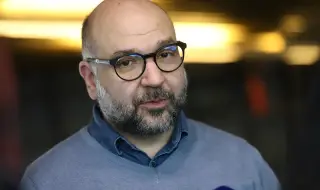
We have processes of disintegration of our social and public fabric, which in recent years have been supported by a breakdown of the institutional environment. The lack of control and institutions that regularly and impartially do their job contributes to all this. This opinion was expressed to the Bulgarian National Radio by political scientist Hristo Panchugov. According to him, confirmation of this are the revelations surrounding nursing homes in recent days.
"There is a service that is becoming increasingly urgent – the one that is related to hospices and the elderly, but which is currently simply absent on the Bulgarian market. This is also complex – "lack of personnel, lack of opportunity for a large part of Bulgarian society to pay an adequate price for a truly meaningful service of this kind, which leads to abdication at every level - abdication of people to seek a solution, abdication of such institutions to offer an adequate service, abdication of the state to impose rules where there are obvious violations," he commented.
In his words, several waves of the European Values Survey measure extremely low public tolerance and a very low level of social trust, i.e. of our desire to trust and rely on those close to us.
"We are where we are, and we are obviously not doing anything to become more prepared", said the political scientist, drawing an analogy between these shocking revelations and our readiness for the eurozone.
The euro is not some imaginary future place, it is part of a commitment that we have already made, he recalled in an interview for the program "Above All". And he added:
"We are already in the EU. And the fact that so many years later there is such a level of disintegration in society and in our institutional environment is worrying in itself. What is happening right now with the ministers is damage control. This is an attempt to extract a short political dividend or rather to cover up the inability of the state to react and intervene in such situations, as well as to create the feeling that other similar situations are no longer possible".
"The euro has imposed itself as some imaginary proto-human image of an enemy that we can fight relatively easily, i.e. it is already at the level of the irrational, of fears that people consider to be current, objective, but they are not entirely rational. This cannot be fought with either a campaign or rational arguments. Unfortunately, this moment has passed. We will continue to see a desire to further refine this image, to use it for radicalization, for managing public attitudes, for mobilization on one topic or another. I do not think that the months that await us will pass without the continuation of the protests, and an attempt to at least escalate or radicalize this exercise. This cannot be overcome with any information campaign, but it can be managed and can be done in a way that does not allow such escalation, radicalization and expansion of these damages", commented Hristo Panchugov. According to him, the only thing that would help in this situation is to introduce the euro as soon as possible.
The more politicians get out of this conversation about the enemy that some people are trying to fight, called the euro, and we start talking about the essence of what is happening from here on out, that the introduction is only one element of everything that is coming in this direction, the easier we can get out of such a situation, the political scientist believes and added:
"I do not think that the Bulgarian political class can be expected to suddenly surpass itself, i.e. suddenly start seeing the big picture and trying to take advantage of this reformist bias that the path to eurozone membership could eventually give us".
According to him, we need to start realizing the role of citizens and how they can be a meaningful player in this direction.