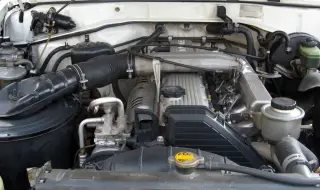
In the era of technological saturation, downsizing and increasingly strict environmental regulations, there is one mechanical phenomenon that seems to be immune to the passage of time. It is the Toyota 1HZ - a naturally aspirated diesel engine that has become a religion for off-road enthusiasts and a synonym for immortality. If for modern engines half a million kilometers is a limit on age, for this six-cylinder monster they are simply a period of development.
Debuting back in 1990, the 4.2-liter inline six-cylinder engine relies on pure mechanics. You will not find turbochargers, capricious electronics or complex exhaust gas purification systems here. The modest on paper 130 hp and a torque of 285 Nm may not raise the adrenaline at the traffic light, but it is in the low load that the key to its longevity lies. The cast-iron block and classic mechanical fuel injection make it practically invulnerable to poor-quality diesel or extreme temperature amplitudes.
The main residence of the 1HZ is the legendary Toyota Land Cruiser 70 - the car that is the backbone of humanitarian missions, the mining industry and farmers in the harshest corners of the planet. From the sands of the Sahara to the Australian outback, the Land Cruiser with this engine has proven to be “armored” a machine that can be brought back to life with just a set of wrenches and basic knowledge, without the need for a diagnostic computer.
Although it has long been persona non grata in Europe due to Euro 6 standards, the demand for the 1HZ worldwide has not subsided. The reason is simple: where reliability is a matter of survival, homologation takes precedence over robustness. While the modern 2.8-liter diesel (2.8 D-4D) with 204 hp and a common rail system dominates the EU market, fans of true off-road adventure continue to bow to the simplicity of the old fighter.
Ultimately, the 1HZ is not just an engine, but proof that when engineering thought focuses on resource, not marketing, the result is eternal. It is no surprise that Toyota has continued to produce it for three and a half decades now - simply because perfection in its rawest form does not need modernization.