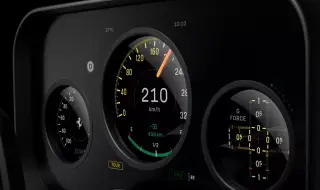
Space technology and Italian passion have intertwined in an unexpected alliance to turn Maranello's electric future into a true sensory feast. Ferrari sought the expert help of NASA to calibrate the acceleration of its new Luce model in a way that takes your breath away without causing stomach discomfort. It turns out that the fine line between wild emotion and pure physical discomfort lies in detailed studies of human tolerance to overload.
Benedetto Vigna, the helm of the legendary brand, is categorical - the brutal and often startling thrust of modern electric cars can be more oppressive than exciting. That's why engineers have dissected every aspect of the dynamics: from longitudinal acceleration and precise braking to cornering behavior. The goal is for Luce to be not just a fast machine, but an instrument that resonates with human nature, thanks to the experience gained from aerospace simulations.
Despite the lack of a traditional internal combustion engine, the pilot will not be deprived of control. Behind the steering wheel of Luce are feathers that, instead of regeneration, will conduct the delivery of torque, giving the car a lively and pulsating response. This is not about artificially imitating the symphony of the V12, but about refining the natural "voice" of the electric configuration, so that the brand's characteristic signature remains intact.
Although the supercar is not designed as a Spartan weapon for the track, it promises a solid range of over 500 km on a single charge. Clearly, Ferrari believes that the future should not be an eerily quiet sterile capsule, but an emotional experience in which NASA science and Maranello aesthetics work in full sync.