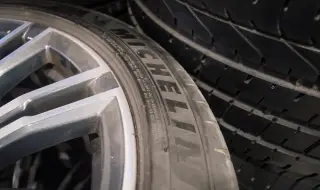
Many drivers live with the illusion that as long as the “grip is high“, the tire is completely roadworthy. However, the reality is much harsher and experts remind that the visual condition and the ability of the tire to hold pressure are far from the only criteria for safety. It turns out that even with a completely intact tread, a set of tires can be a hidden threat on the road.
The main enemy of tires is not only asphalt, but also time and the environment. Rubber compounds are extremely sensitive to ultraviolet rays, sharp temperature amplitudes and humidity levels. Over the years, the material inevitably loses its elasticity and strength - a process known as “tire aging“. As a result, it hardens and can no longer provide the necessary grip, which is critical during extreme braking or wet pavement.
The world leaders in tire production are categorical: the service life has its limit, which usually varies between 4 and 6 years, depending on the brand and composition. After this period, the chemical bonds in the rubber weaken and the structure changes irreversibly, regardless of whether the car is driven daily or collects dust in a dark garage.
It is important to understand that even "new"-looking tires that have been in storage for a long time have already begun their degradation process. If your tires are approaching their sixth year, there is no room for compromise - they are for the trash. Do not underestimate the age of the "shoes" of your car, because in a critical situation, these few millimeters of elastic rubber are the only thing that keeps you on the road. To save yourself some headaches, check the DOT code on the tire's sidewall.