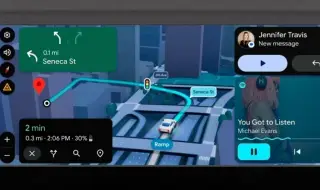
Infotainment systems in modern cars are about to take a giant leap into the future, leaving behind clunky interfaces and unused screen space. Google has officially lifted the curtain on the next generation of Android Auto, which promises to turn your car's dashboard into a true extension of your smartphone. Wow, finally we will see software that is not “ashamed” to use every available millimeter of expensive displays built into the interior.
The most visible and long-awaited change is the full utilization of the screen area. Until now, many automakers have limited the system to strictly defined frames, but the new design allows Google Maps to literally “flow” across the entire display. This is achieved through a smart extended background that removes visual boundaries and creates a sense of endless navigation. All other controls – for music, messages or notifications – no longer stand in isolated sectors, but “float“ discreetly on the map, allowing the driver to not lose focus on the road.
Aesthetics also receive a serious dose of attention with the implementation of the Material 3 Expressive visual language. For users, this means more beautiful fonts familiar from their personal devices, a rich palette of wallpapers and animations that move with the ease of silk. The application bar has now evolved into a dynamic floating panel that automatically positions itself on the side or at the bottom of the screen, adjusting to the specific format of the dashboard – whether you're driving a Tesla-like vertical screen or an ultrawide panorama.
The real trump card up the tech giant's sleeve, however, is the introduction of widgets. Drivers will soon be able to personalize their workspace with a scrolling stack of useful tools - from a clock and weather forecast to smart home controls via Google Home and even family photos. All of this functionality is powered by Gemini's artificial intelligence, which is becoming increasingly integrated into the driving experience. Add to the package support for video apps and improved "immersive" navigation, which finally turns the car into a mobile digital hub.
While Google is still keeping the exact schedule for the update's rollout by make and model under wraps, one thing is clear - the updates will appear in stages throughout 2026. It looks like even climate control will soon be under Android Auto, which would put an end to the hassle of navigating through the car's various menus. We'll just have to wait for the first real-world tests to see if this digital revolution will work as smoothly as it looks on paper.