Although Bulgaria is not among the countries that produce entire cars in mass series today, the contribution of the country and Bulgarian talents to the global automotive industry is significant and constantly growing. From historical attempts at local production to Bulgaria's modern role as a center for high-tech components and software solutions, the Bulgarian footprint is deeply intertwined in the global automotive chain.
Bulgaria as a Manufacturing Hub for Automotive Components
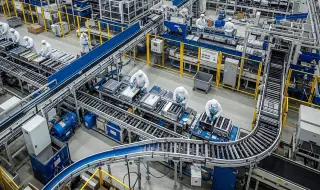
One of Bulgaria's most tangible contributions to global automotive production is its role as a manufacturing hub for various automotive components. Over the past two decades, many major international suppliers to the automotive industry have invested in Bulgaria, opening high-tech plants.
Wiring systems: Companies such as Yazaki (Japan) and Leoni (Germany) have large production bases in Bulgaria, where complex wiring systems are produced for a number of global automotive brands. These systems are vital to the electrical system of every modern car.
Electronics and sensors: Other international companies produce various electronic components, sensors and control modules in Bulgaria, which are the basis of modern security, comfort and engine management systems. For example, parts for tire pressure monitoring systems, parking sensors, and other electronic components are manufactured in Bulgarian factories.
Interior elements and other parts: Some factories also produce interior components, such as seats, textile elements, and various metal and plastic parts, which are subsequently integrated into cars assembled around the world.
These enterprises provide thousands of jobs and integrate Bulgaria into the global automotive industry supply chains.
Software Innovation and IT Engineering
Bulgaria has established itself as a strong hub for IT outsourcing and software development, with the automotive sector being one of the main beneficiaries. Bulgarian software engineers and companies work on key aspects of modern cars.
Infotainment systems: Many Bulgarian software teams contribute to the development of infotainment systems (information and entertainment systems), which include navigation, connectivity, multimedia and user interfaces for leading automotive brands such as Daimler (Mercedes-Benz), BMW, Audi and others.
Driver assistance systems (ADAS): Bulgarian engineers are involved in the development of software for ADAS, such as lane keeping systems, adaptive cruise control, automatic emergency braking and parking. These are complex algorithms that require in-depth knowledge in the field of artificial intelligence and machine vision.
Autonomous driving: Some Bulgarian companies and development centers are participating in pioneering projects related to the future of autonomous driving, developing software modules for sensor fusion, mapping and real-time decision-making.
"Luxoft Bulgaria" (part of DXC Technology), "Visteon" (has a large development center in Sofia) and others are among the companies with a large number of Bulgarian engineers who directly contribute to software solutions in the automotive industry.
High-level design and engineering
Although it is not widely known, talented Bulgarian designers and engineers work in the teams of global automotive concerns, contributing to the vision and technical precision of future models.
Some Bulgarian designers are part of the teams that shape the appearance and interior of new models of leading European and Asian brands. Their ideas and creativity find their way into the final product that millions of people around the world will drive.
Bulgarian mechanical engineers and materials specialists are working to optimize components, reduce weight, improve aerodynamics, and implement new technologies in production.
Innovation and electric mobility
With the growing emphasis on electric mobility, Bulgaria is also contributing with its own innovative projects and startups.
Although in their infancy, there are Bulgarian companies developing technologies for electric vehicle charging stations, battery management systems, as well as prototypes of electric vehicles aimed at specific niches or urban mobility.
Some Bulgarian companies are also involved in recycling electric vehicle batteries and other eco-friendly solutions that are vital for the sustainable future of the automotive industry.
In conclusion, Bulgaria’s footprint in global automotive production is more technological and highly skilled than mass. From the specialized component factories that supply leading global brands to the thousands of software engineers who write the code for the next generation of automotive systems, Bulgaria plays an important, if often invisible, role in the global automotive ecosystem.