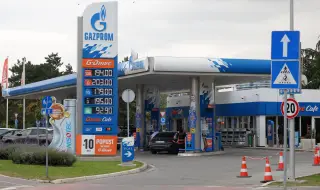
Serbia is in serious trouble because of a deal with Russia in 2008: at that time, the Serbian state oil company NIS (Naftna Industrija Srbije), which was in a very difficult financial situation, was sold to the Russian state oil concern "Gazprom Neft", recalls the German public television ARD. At that time, Serbia hoped for both economic and political advantages - especially Russian support in the conflict with Kosovo.
Today, "Gazprom Neft" and "Gazprom" own 56 percent of NIS. For this reason, in January this year Serbian oil company included in US sanctions package against Russian energy economy.
Supplies have been stopped
The fact that Serbia's most important oil concern has been affected is akin to a geopolitical scandal, explains Serbian Energy Minister Dubravka Džedović Handanović. "The sanctions were not introduced because of Serbia or the Serbian government. US President Joe Biden imposed them at the end of his term against Russia and its energy sector. For us, NIS is very important and of existential importance. We as a country are affected by the fact that two great powers are waging their wars", says Džedović Handanović, quoted by ARD.
Soon after, Donald Trump became US president and exemptions from the sanctions were adopted for NIS so that Serbia's energy supply would not be threatened. But since October 9th, this has been put to an end - there are no more exceptional rules, NIS has indeed come under the impact of sanctions and the repercussions are already tangible.
Since Serbia covers less than a quarter of its crude oil needs with its own production, the country receives fuel mainly from countries such as Kazakhstan, Azerbaijan or Nigeria. It is delivered by tankers to Croatia and from there it reaches Serbia by pipeline. After the US sanctions came into force, the Croatian company JANAF, which operates the pipeline, stopped supplies to NIS.
Reprehensions on the Serbian government
The Serbian opposition is criticizing: President Aleksandar Vučić has not taken any action against dependence on Russia. Moreover, it has long been clear that at some point the US sanctions will indeed come into force, economic expert from the opposition Social Democratic Party SSP Dušan Nikežić told ARD.
"I am amazed by the government's irresponsible attitude towards this problem. Now the energy minister is telling us that we were just waiting for the NIS management to prepare some kind of plan", says Nikežić. He points out that Vučić has repeatedly had the opportunity to talk to Russian President Vladimir Putin about the problem. "The result is that Putin said: "We will also turn off the gas tap".
The gas contract has been extended only until the end of the year
As for gas supplies, the ten-year gas contract concluded with "Gazprom" expired in May, ARD explains. After that, it was extended by the Russian side only until the end of the year.
Now in Serbia there is speculation that in this way Russia wants to put pressure so that the NIS concern does not become the property of the Serbian state again. However, the Russian ambassador to Belgrade, Alexander Botsan-Kharchenko, assures: "We will not stop gas supplies to Serbia - we will continue them at the best price".
Serbia to buy back its shares?
Serbian President Aleksandar Vučić met a few days ago with the head of "Gazprom Neft" Alexander Dyukov and the Russian Deputy Minister of Energy Pavel Sorokin to discuss the NIS issue. It was never said what the final solution would be, but Vučić promised the Serbs that there would be no energy crisis, writes ARD.
"Times are not easy. But I can assure the citizens of Serbia that there will be no shortage of oil or oil derivatives, or an energy crisis in the country. Our Russian friends understood our message, and we understood what their interests are. We will do what is best for Serbia in tactical and strategic terms," Vucic said.
Serbian media had learned from various sources that the Serbian state was planning to buy back part of the shares in NIS, so that Russian state-owned concerns would no longer be the majority owners. And if one day the situation for Russia on the international level "normalizes", the shares could be resold again, the plan said.
Is an energy crisis looming?
There are currently no energy problems in Serbia, the German public media outlet states. But some Serbs fear that they will once again have to buy petrol in cans, as they did in the 1990s. Citizens are already feeling the first effects of the sanctions - at NIS and "Gazprom" gas stations in Serbia, it is no longer possible to pay with Visa, Mastercard and American Express credit cards.
Author: Oliver Soos (ARD)