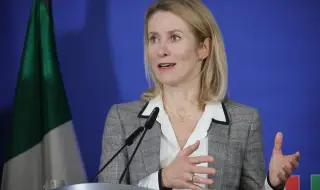
The EU does not have enough geopolitical power when it is not united, said the European High Representative for Foreign Affairs and Security Policy Kaya Kallas at an event in Brussels dedicated to the enlargement of the Community, BTA reports.
„We need to explain why the enlargement of the EU is important for us. It is not a natural process, but a result of geopolitical changes“, she added.
In response to a question about Turkey, Kallas noted that the country is lagging behind in terms of European requirements related to foreign policy. „We need cooperation with Ankara on many issues, we have common interests. "However, Turkey's domestic policy is not in line with European standards, and that is a problem," Kallas concluded.
European Commissioner for Defence Andrius Kubilius said enlargement was vital for the EU from a security perspective. "The question before us is whether we can confront Russia at the current level of its military capabilities, acquired in recent years," he added.
Kubilius stressed the need for the EU to find an answer for the long-term future of Europe in the face of the persistent threat of an authoritarian Russian regime. "We could try to achieve change, but that will not be possible as long as Putin and Lukashenko are in power in Russia and Belarus. Change could come through the success of the EU accession candidates, which would have significant repercussions for the societies in Russia and Belarus," he said. The European Commissioner noted that there is no good example of a country from the former USSR that has succeeded on its own.
The meeting was also attended by EU Enlargement Commissioner Marta Kos, the Prime Ministers of Albania Edi Rama, Montenegro Milojko Spajic, Moldova Alexandru Munteanu, the Speaker of the Serbian Parliament Ana Brnabić and Ukrainian Deputy Prime Minister Taras Kachka.