The President of the European Council Antonio Costa announced on social networks that the Russian assets frozen in the European Union will not be unfrozen until the end of the Ukrainian conflict.
"Today we fulfilled the promise", given in October by the European Council and the leaders of the European Union - to keep the frozen Russian assets until the end of the conflict in Ukraine and, as Costa put it, Russia "not to compensate for the damage", Costa wrote, quoted by AFP.
"The next stage: to meet Ukraine's financial needs for 2026-2027", Costa added.
On December 11, the permanent representatives of EU countries have agreed on extraordinary powers for the European Commission to preserve frozen Russian assets.
This is planned to allow the asset freeze to be in place indefinitely, without the need to renew the decision every six months.
The Danish presidency of the Council of the EU said that permanent representatives "agreed to a revised version of the proposal under Article 122 of the Treaty on the Functioning of the European Union and approved the start of a written procedure for the adoption of a formal decision by the Council," noted Politico, which has seen the EC's legal text, "supported by 27 EU permanent representatives."
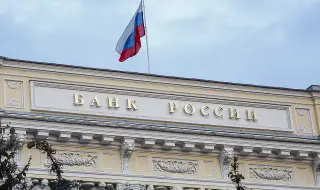
The European Union (EU) has agreed to an indefinite freeze on Russian Central Bank assets held in Europe, removing a major obstacle to using these funds to help Ukraine, wrote "Reuters".
The EU has agreed to freeze 210 billion euros worth of Russian sovereign assets indefinitely, instead of voting every six months to extend the freeze.
More than 200 billion euros worth of Russian Central Bank assets have been frozen in Western countries since the start of Russia's invasion of Ukraine in 2022. Most of these funds are held in accounts at the Euroclear depository in Belgium.
The Europeans want to use this money to provide Ukraine with a "reparation loan". The idea is expected to be discussed at the EU summit on December 19.